Table of Contents
- Ear Piercing Types at a Glance
- 1. Lobe Piercing
- 2. Second and Third Lobe Piercings
- 3. Helix Piercing
- 4. Flat Piercing
- 5. Forward Helix Piercing
- 6. Tragus Piercing
- 7. Conch Piercing
- 8. Rook Piercing
- 9. Daith Piercing
- Why Flat Back Earrings Work So Well in a Curated Ear
- Flatback Earrings vs Butterfly Back Earrings
- How to Build a Curated Ear
- Choosing Jewellery for Your Piercing
- Can You Use Flatback Earrings in Lobe Piercings?
- What Are the Best Earrings for Cartilage Piercings?
- The Ear as a Personal Composition
- FAQs
An ear can hold more than jewellery. Flatback earrings can hold rhythm, character and a quiet expression of self.
From the simplicity of a single lobe piercing to the considered composition of a helix, tragus or conch, today’s ear is increasingly personal. There is no one formula for a beautifully curated ear — only the combination that feels most naturally yours.
Understanding the different types of ear piercings is the first step. The second is choosing jewellery that works beautifully with each placement.
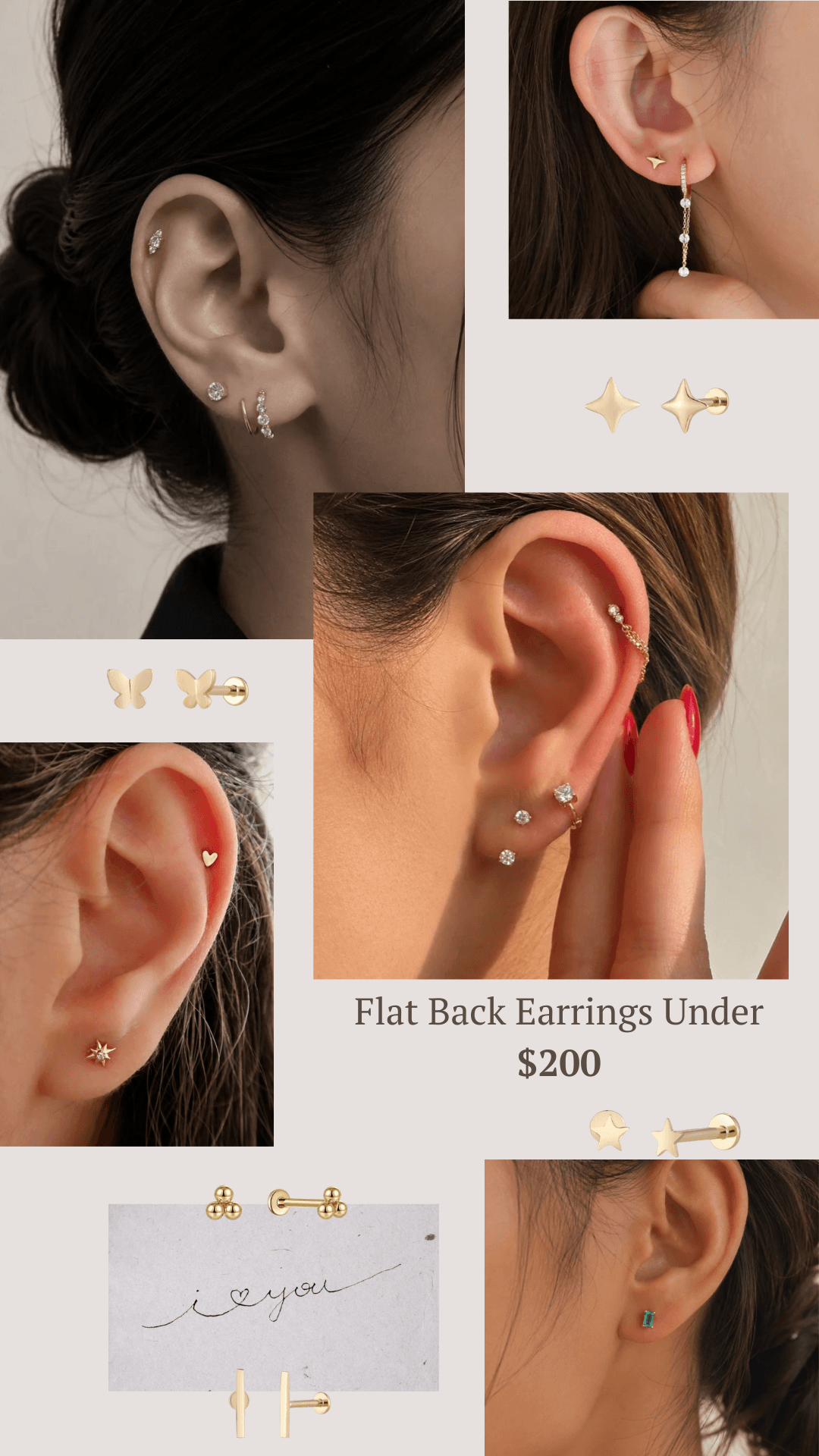
In this guide, discover the most popular ear piercing types, where they sit, the earrings commonly worn in each and how flat back earrings can create a refined foundation for an everyday ear stack.
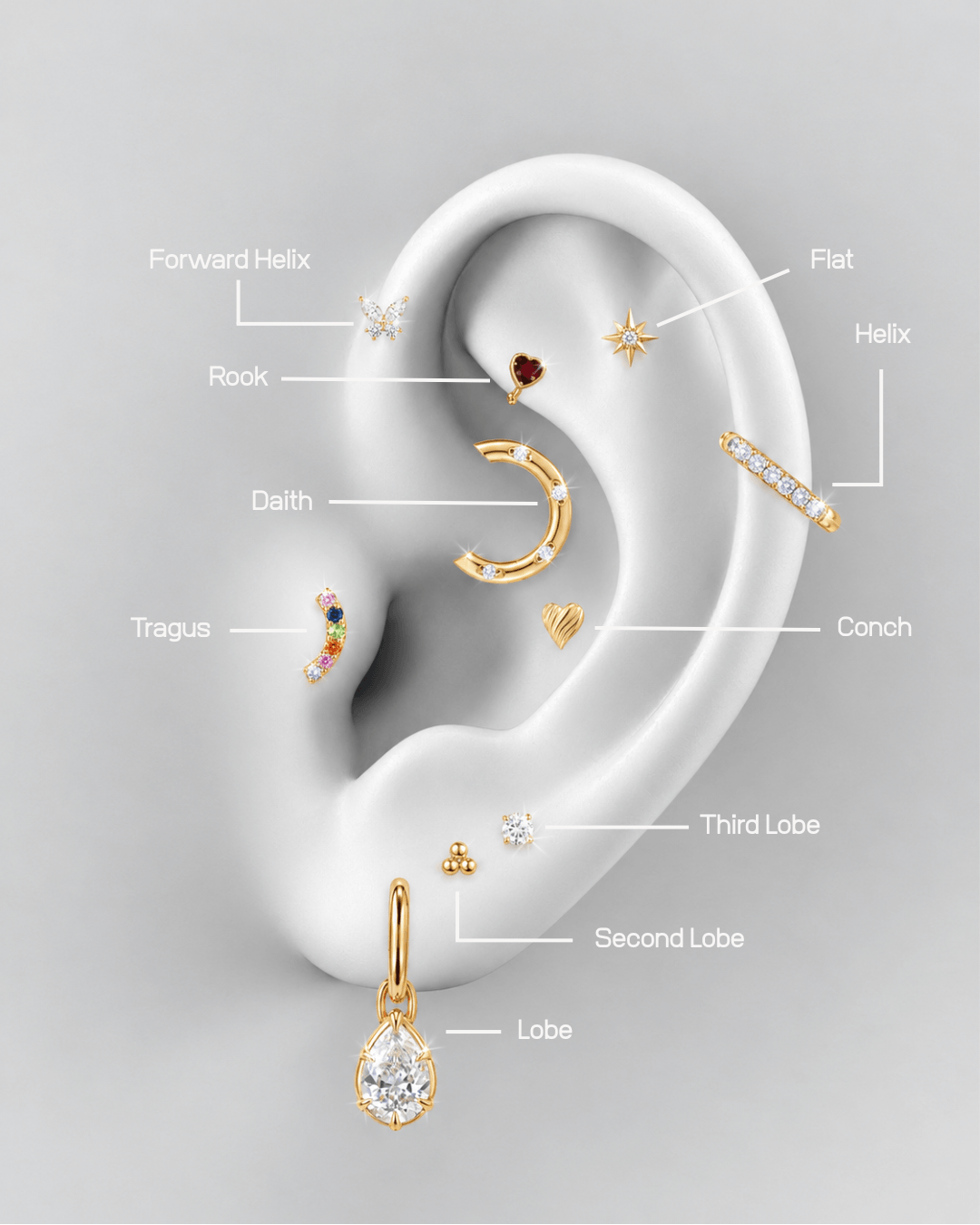
Ear Piercing Types at a Glance
The ear offers many possibilities for jewellery, but most placements fall into two broad categories: lobe piercings and cartilage piercings.
Some of the most popular placements include:
- Standard lobe
- Second and third lobe
- Helix
- Forward helix
- Flat
- Tragus
- Conch
- Rook
- Daith
Every flatback earrings is anatomically different, so not every placement will suit every person. A professional piercer can assess your anatomy and advise on appropriate placement, sizing and jewellery.
Rainbow Stud Earring
$569.00
The Rainbow Stud Earring brings together vibrant stones in a refined silhouette, playful yet polished. A bright pop of colour for your everyday stack If you would like a pair, please add two to your cart.… read more

Larme Convertible Huggie Earrings
$2,290.00
One earring, two entirely different moods. Wear the Larme as a sleek gold huggie when the day calls for something understated. The kind of earring that earns its place in your collection by working twice as hard. Wear it to… read more

1. Lobe Piercing
The classic starting point.
A standard lobe piercing sits in the soft lower section of the ear and offers perhaps the greatest freedom when it comes to jewellery.
What earrings can you wear in a lobe piercing?
Once appropriately healed, lobe piercings can accommodate an extensive range of styles, including:
- Fine studs
- Diamond studs
- Flat back earrings
- Huggies
- Hoops
- Drop earrings
- Statement earrings
For an understated everyday look, a single fine stud creates a quiet point of light.
For something more expressive, let your first lobe become the anchor of an ear composition and build upwards.
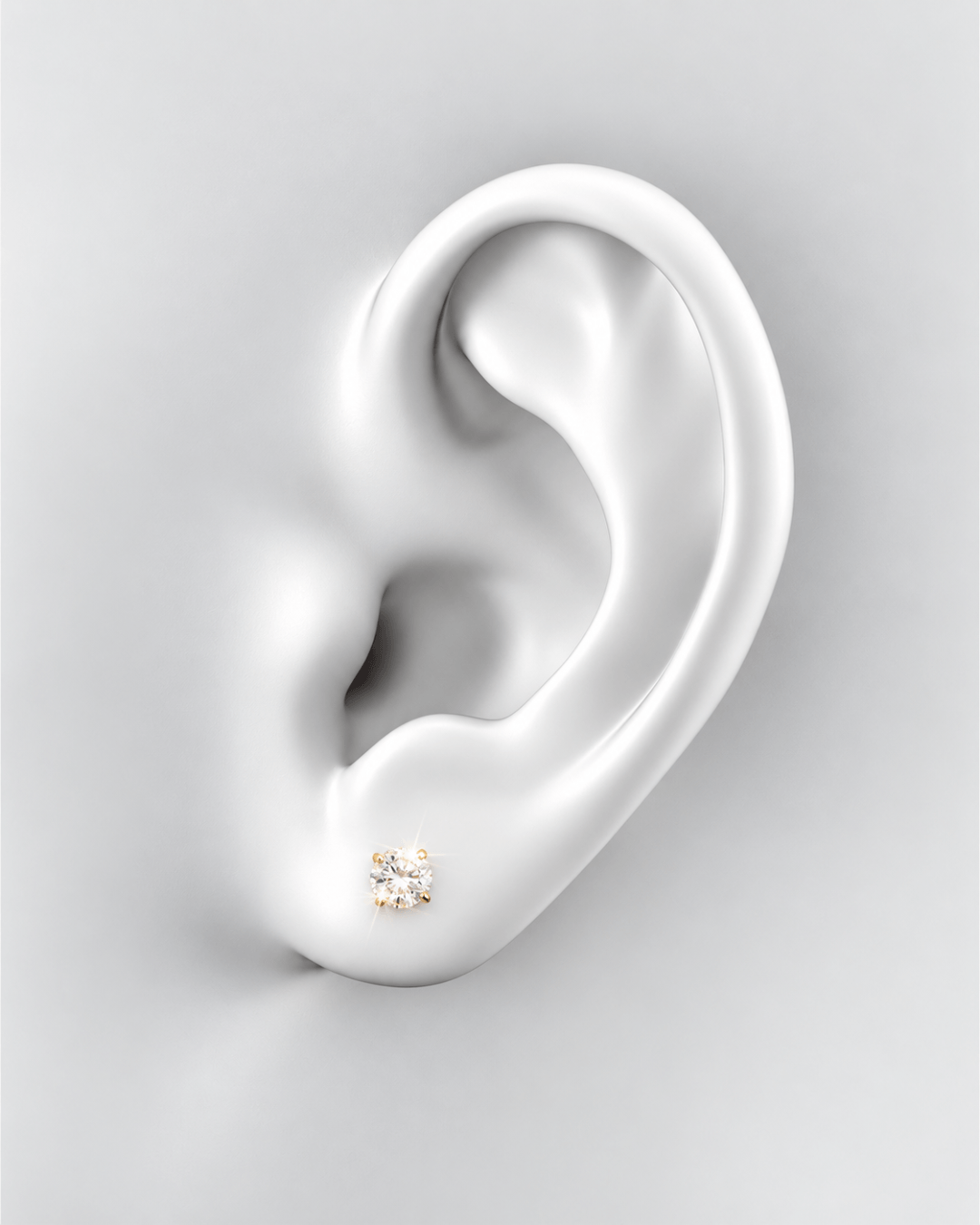
Essence Diamond Flatback Earring
$339.00
Nothing extra. Just brilliance. The Essence Studs are your everyday signature, timeless, versatile, and quietly powerful. … read more

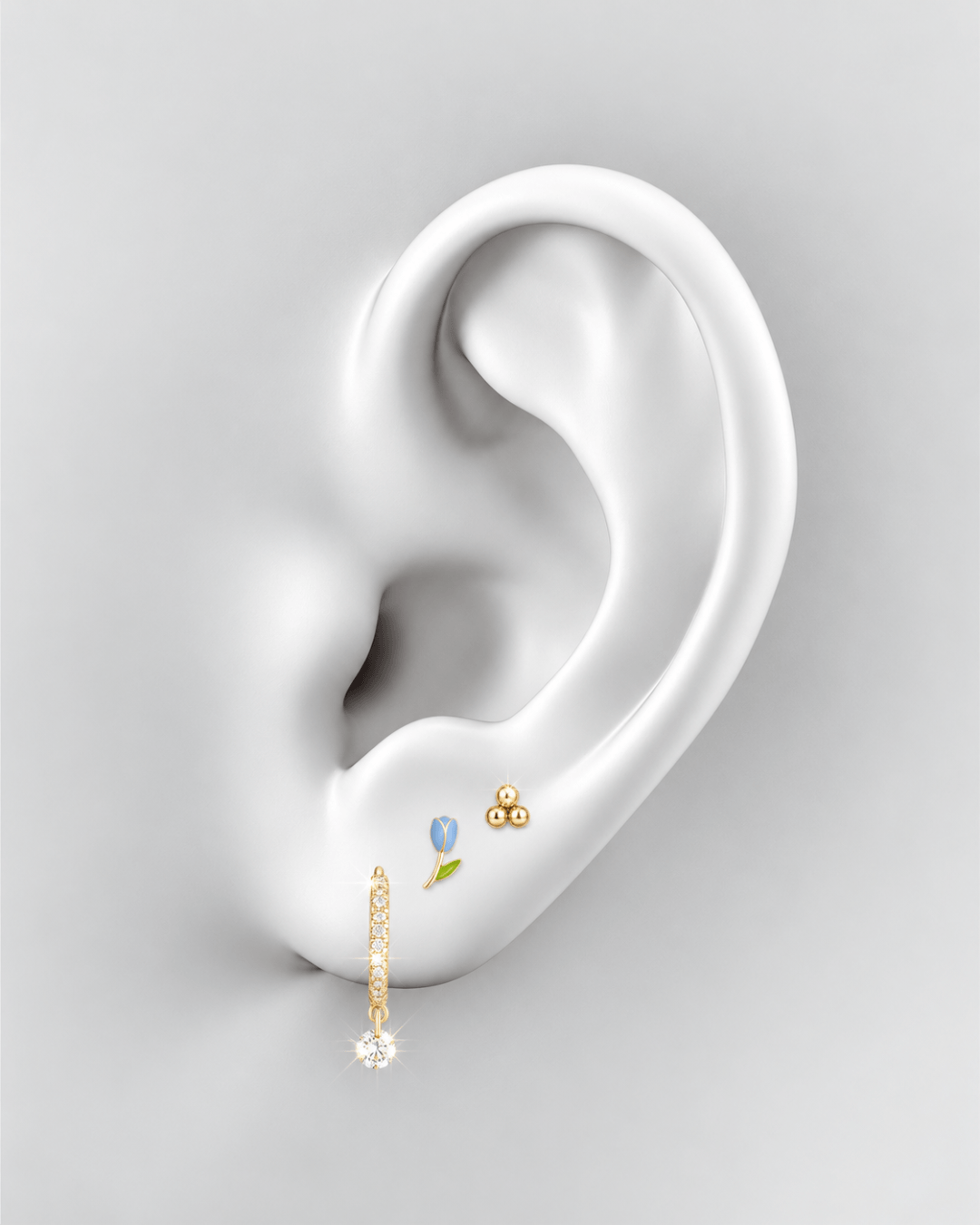
2. Second and Third Lobe Piercings
Second and third lobe piercings sit progressively higher along the ear.
Together, they create the foundation of what is often called an ear stack or curated ear.
Best jewellery for multiple lobe piercings
Smaller flatback earrings tend to work beautifully as the placements move upwards.
Consider combining:
- A hoop in the first lobe
- A diamond or sculptural stud in the second
- A tiny flat back stud in the third
The pieces do not have to match.
Instead, look for a relationship between them — perhaps through scale, shape, metal or light.
A curated ear feels most contemporary when there is enough variation to create interest and enough restraint to create harmony.
Éclisse Diamond Huggie
$439.00
The éclisse diamond huggie captures the beauty of light in motion. Set with diamonds that reflect with subtle brilliance, it symbolises clarity and quiet confidence. … read more

3. Helix Piercing
The helix sits along the upper outer rim of the ear and is one of the most recognisable cartilage piercings.
Its position makes it a natural place to introduce jewellery above the lobe.
What jewellery is best for a helix piercing?
Depending on the stage of the flatback earrings and professional advice, common helix jewellery includes:
- Flat back studs
- Petite diamond studs
- Sculptural studs
- Small hoops or huggies once suitable for the piercing
A low-profile flatback earrings can be particularly elegant here because the front of the earring becomes the visual focus while the reverse remains discreet.
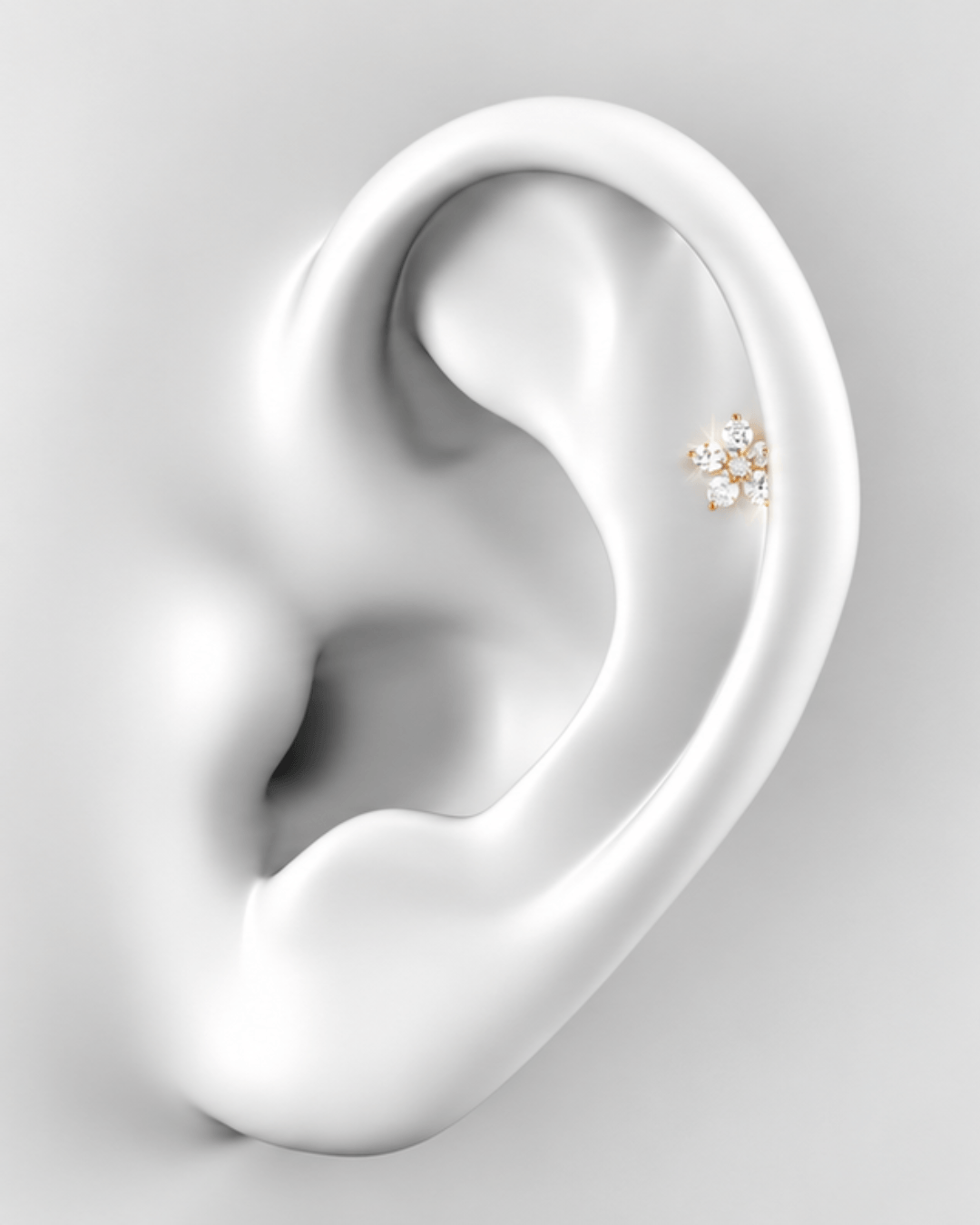
Fleuris Diamond Flatback Earring
$349.00
The fleuris diamond flatback earring blooms with quiet elegance. Six diamonds form a delicate floral design that reflects softness, harmony, and timeless beauty.… read more

4. Flat Piercing
Despite its name, a flat piercing does not describe the earring back.
It refers to a piercing positioned through the flatter cartilage area toward the upper interior section of the ear.
Its broader surface can make it an especially beautiful location for a small but distinctive piece of jewellery.
Jewellery for a flat piercing
Flatback earrings are often styled with:
- Flat back studs
- Diamond motifs
- Geometric forms
- Petite clusters
- Sculptural gold designs
Because this placement offers a visible surface, the jewellery can become a small focal point within the ear.
Think of it almost as punctuation: subtle, intentional and capable of changing the entire composition.
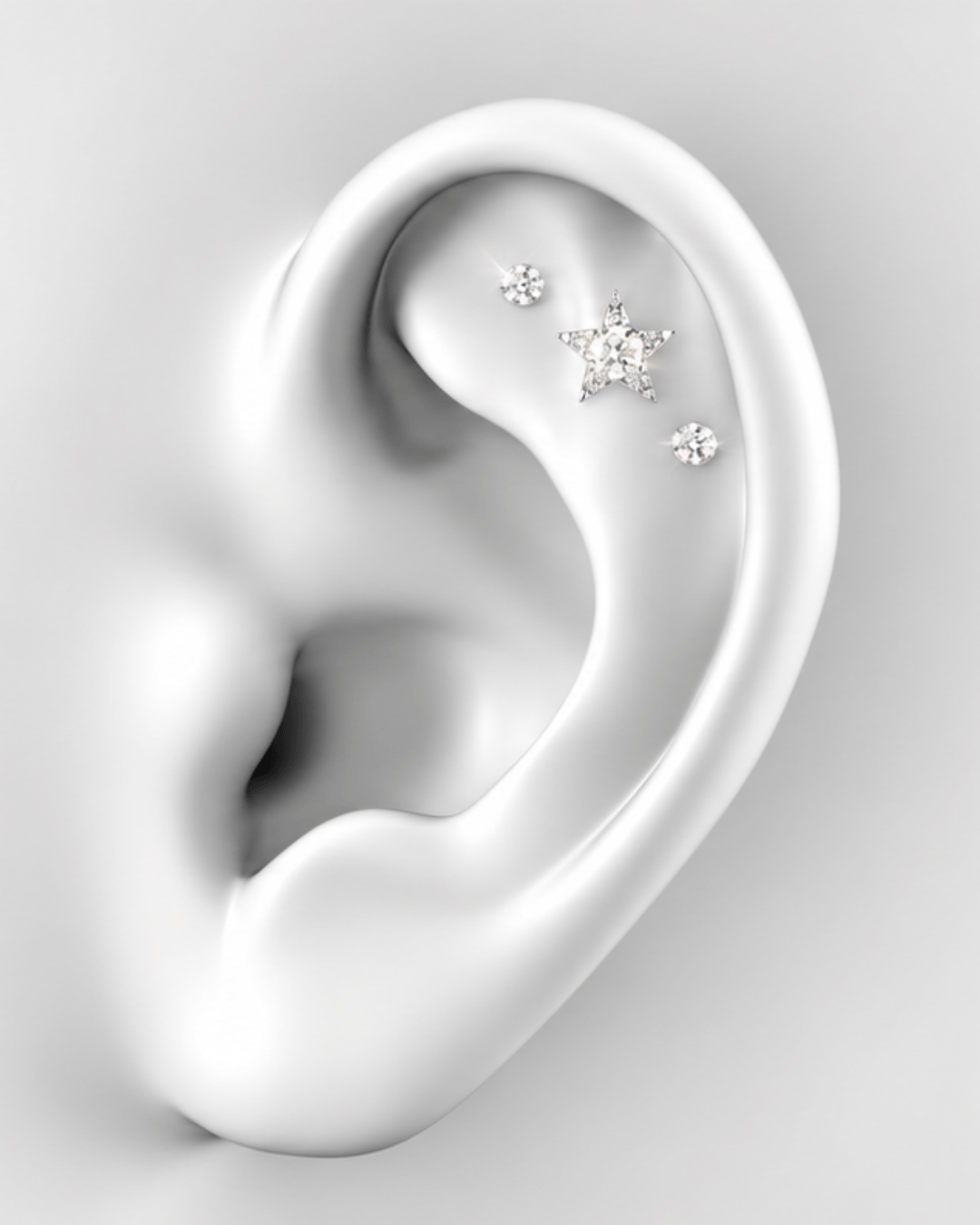
5. Forward Helix Piercing
A forward helix sits toward the front of the upper ear, closer to the face.
One piercing can feel delicate and minimal; two or three can create a beautiful sequence of light.
Best jewellery for a forward helix
Smaller designs generally complement this compact placement.
Consider:
- Tiny diamond studs
- Minimal gold studs
- Flat back earrings
- Petite symbolic motifs
This is a natural place to play with repetition, three graduated stones, for example, without making the overall ear feel busy.
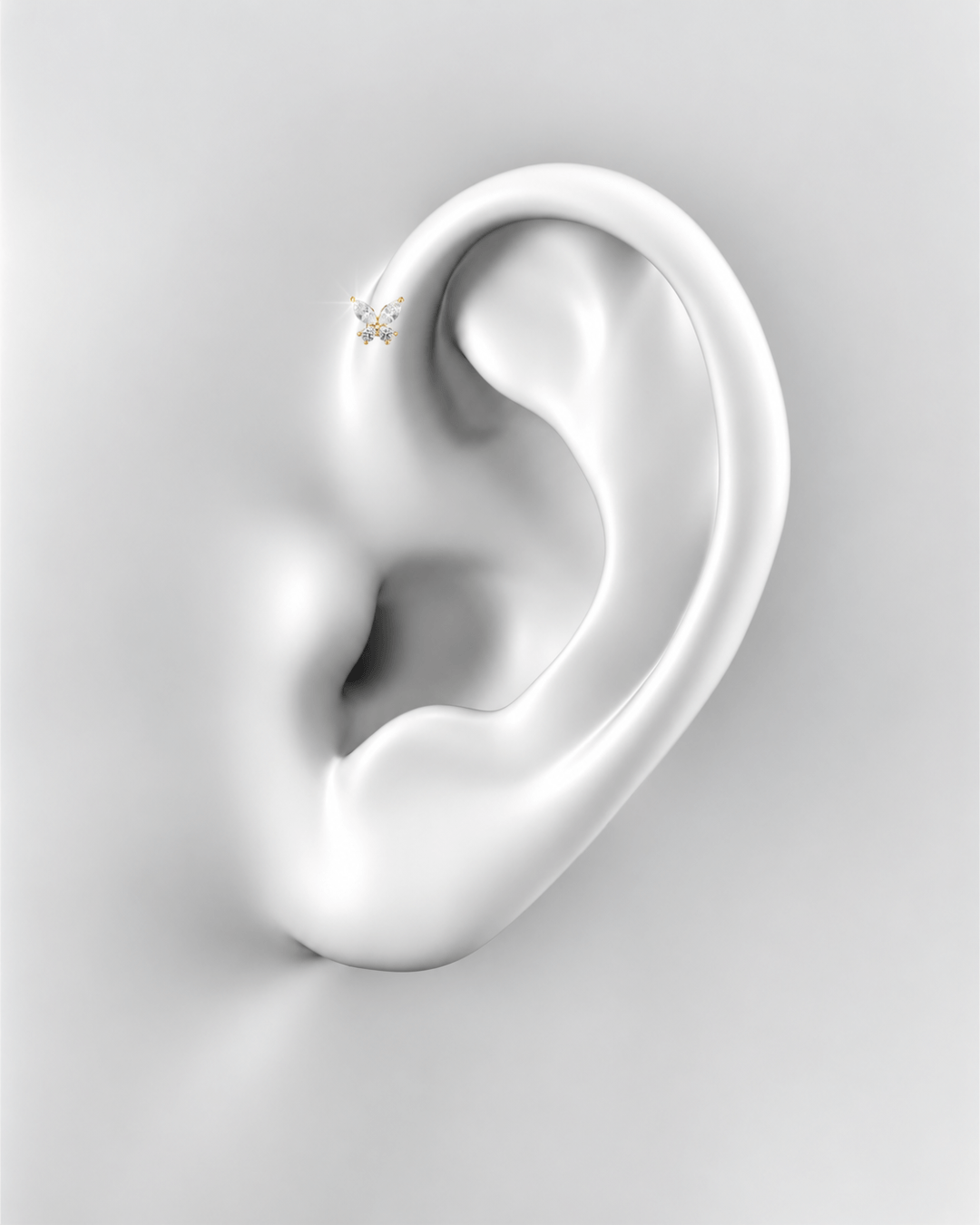
6. Tragus Piercing
The tragus is the small section of cartilage positioned immediately in front of the ear canal.
Because of its central position, even a very small earring can feel surprisingly distinctive.
What jewellery can you wear in a tragus?
Common choices include:
- Small flat back studs
- Petite diamonds
- Minimal gold forms
- Very small decorative motifs
Low-profile jewellery is often favoured for this area because space is limited.
If you regularly wear earbuds or headphones, discuss this with your piercer when considering placement and jewellery.
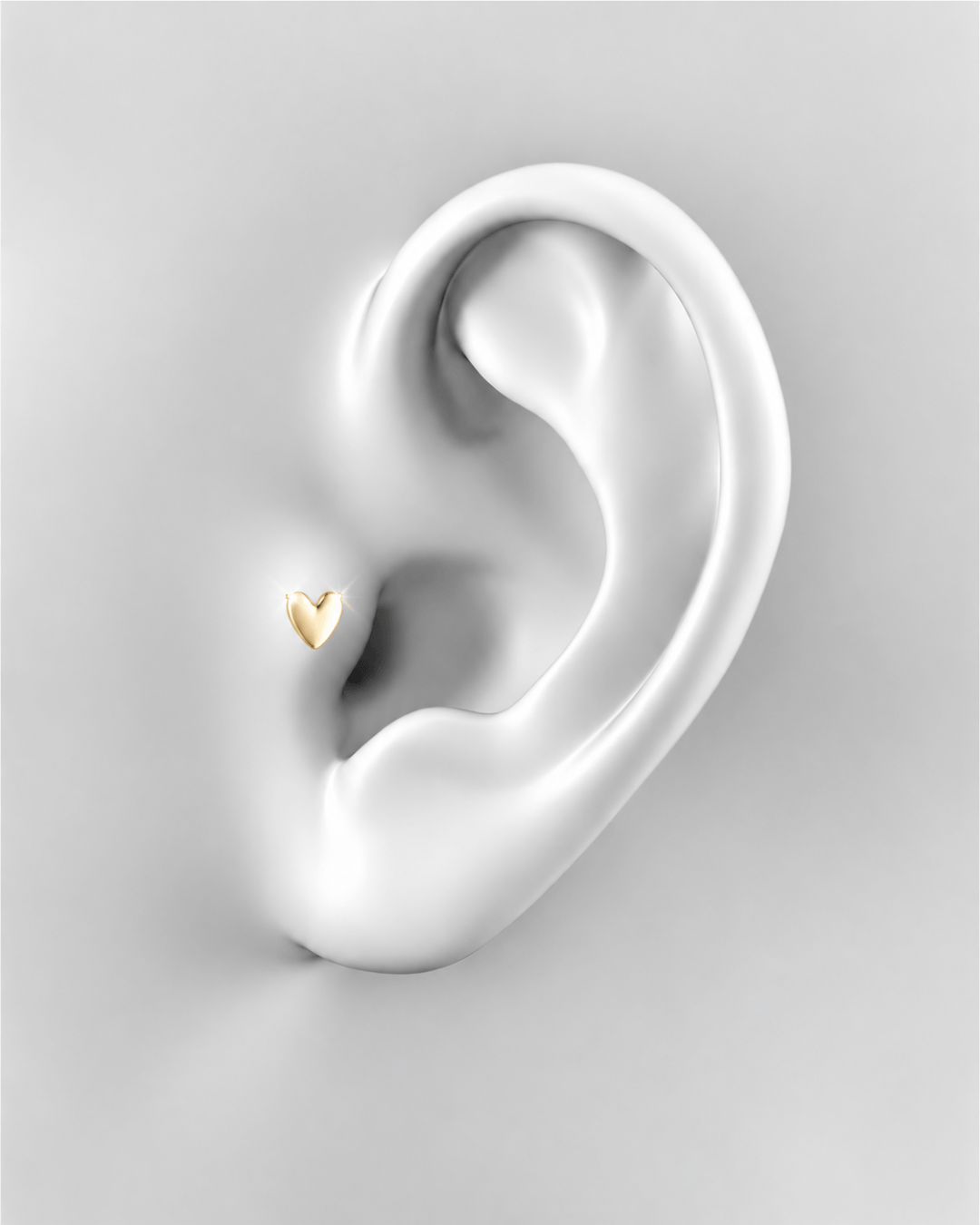
Amour Flatback Earring
$139.00
The amour flatback earring is a quiet expression of love in its purest form. Minimal and golden, it is made for everyday romantics and quiet believers in self love. Finished with a flatback for all day comfort, it is effortless… read more

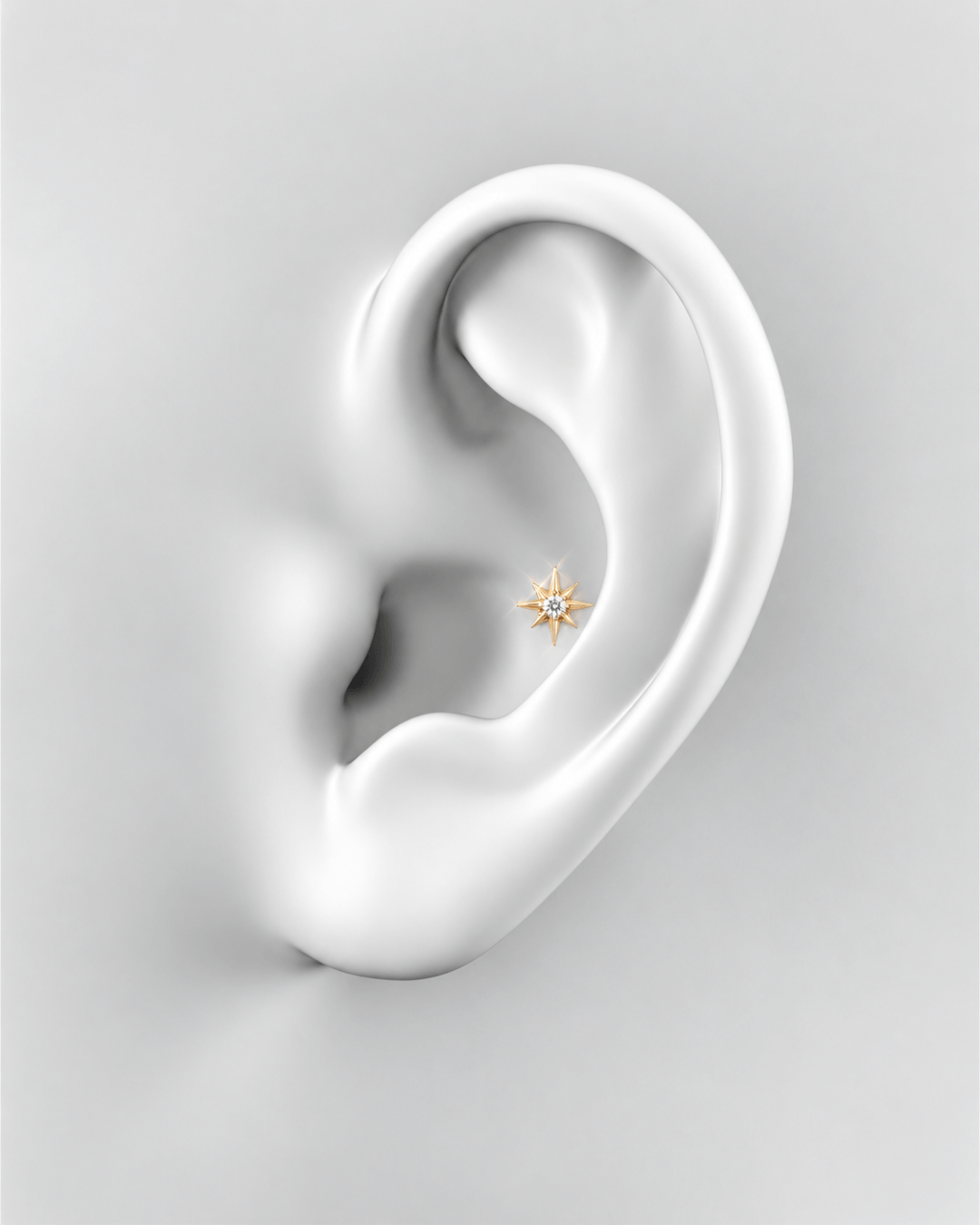
7. Conch Piercing
The conch sits within the central cartilage of the ear.
It offers an entirely different visual perspective from piercings positioned around the perimeter.
Jewellery for a conch piercing
Depending on anatomy and healing stage, a conch may be styled with:
- Flat back studs
- Diamond studs
- Decorative clusters
- Hoops once the piercing is suitably healed
A single luminous stud in the conch can create beautiful depth within an ear stack.
Alternatively, a hoop around the outer ear can turn the placement into a stronger statement.
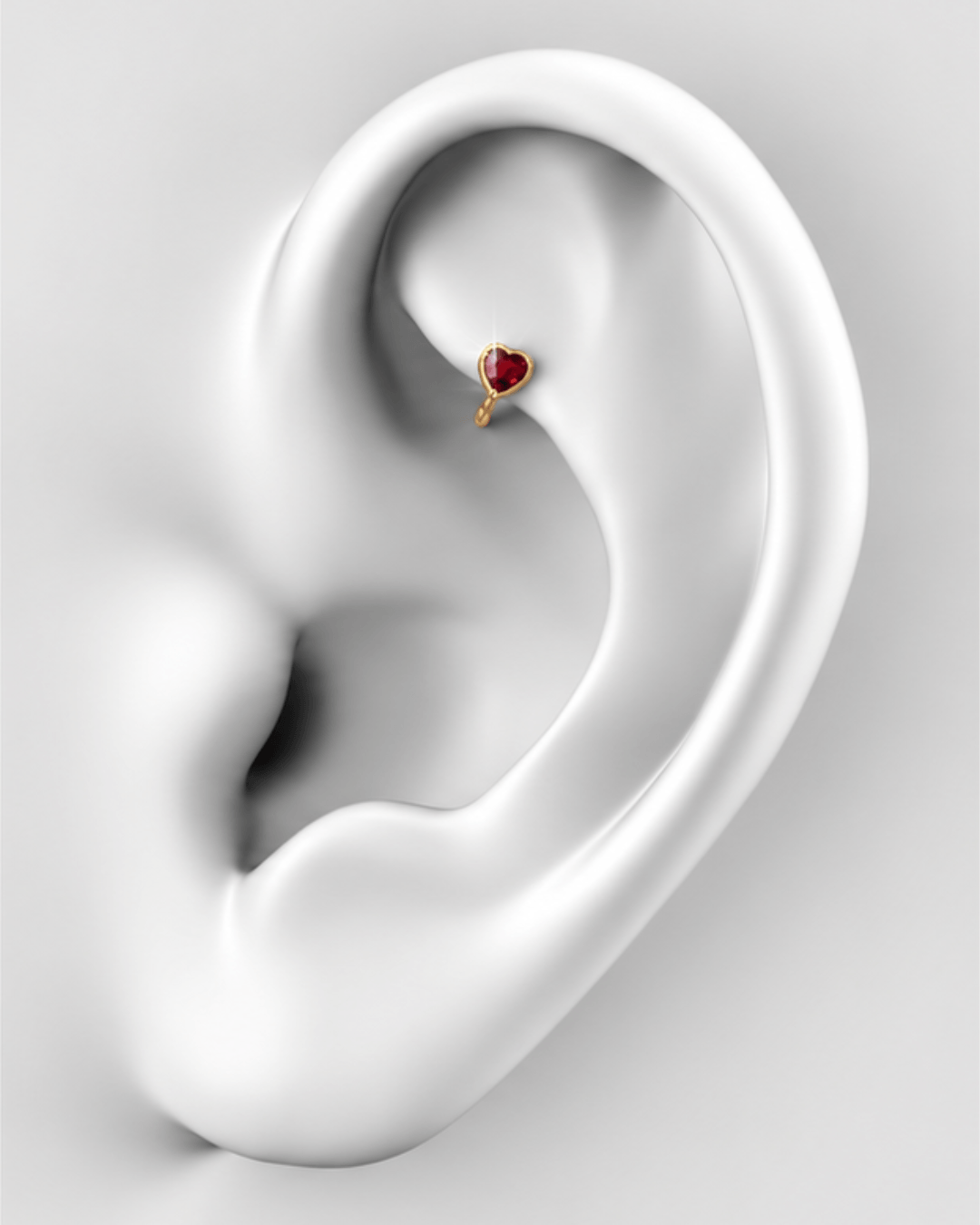
8. Rook Piercing
A rook piercing sits within the upper inner fold of the ear.
Because of the anatomy of this area, jewellery selection differs from placements such as the lobe or helix.
Curved barbells and certain hoops are commonly associated with rook piercings rather than conventional flat back studs.
This is an important reminder that the most beautiful ear stack begins with the anatomy itself.
Not every piece belongs everywhere.
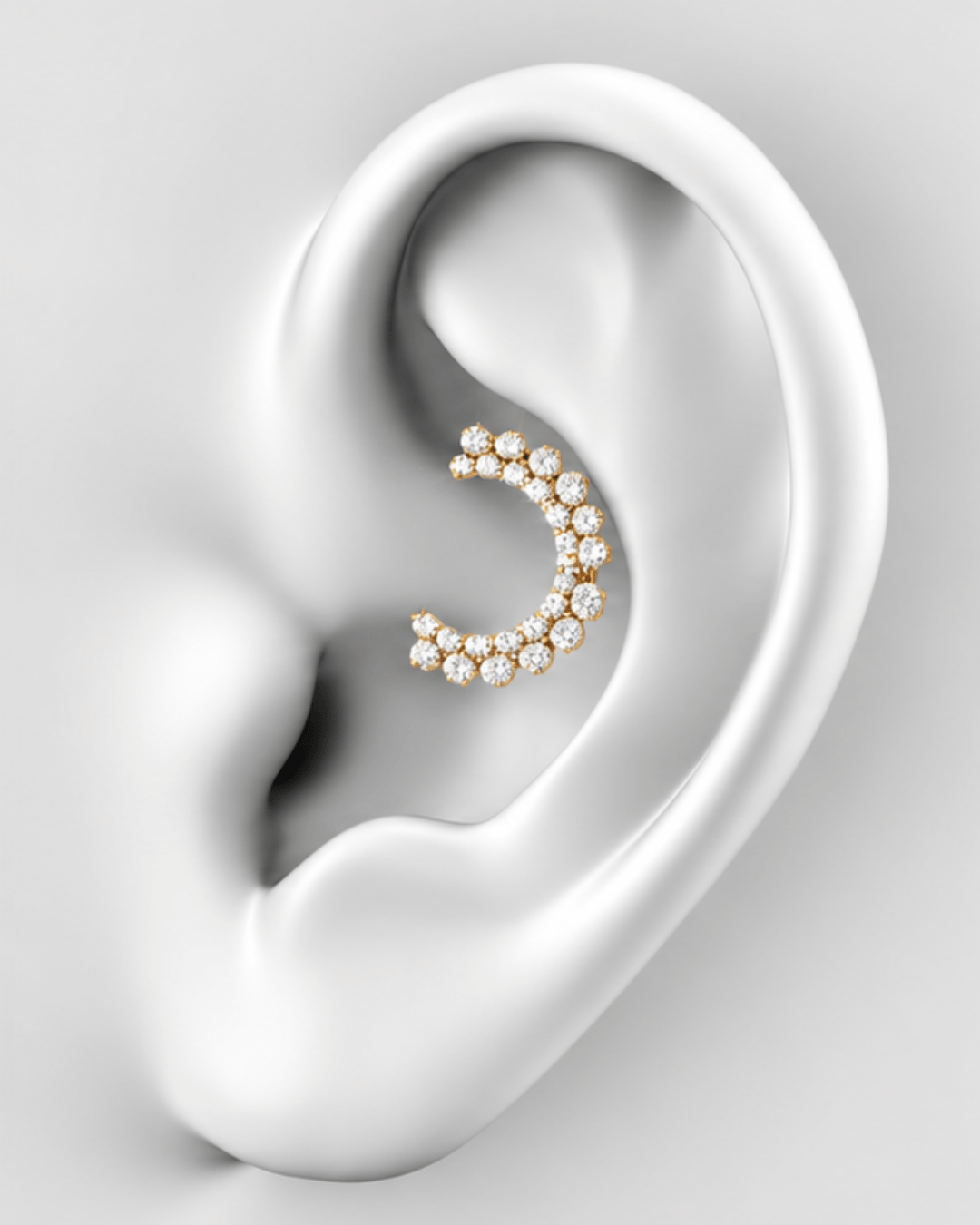
9. Daith Piercing
The daith is located within an inner cartilage fold close to the ear canal.
Ring-style jewellery is commonly used for this placement.
Because the daith follows a very particular section of ear anatomy, professional assessment is especially important when considering the piercing.
And while daith piercings are sometimes discussed online in connection with migraine relief, jewellery should never be considered a medical treatment for migraine or other health conditions.
Why Flat Back Earrings Work So Well in a Curated Ear
Among all the jewellery styles available for modern ear styling, the flat back earring has become particularly important.
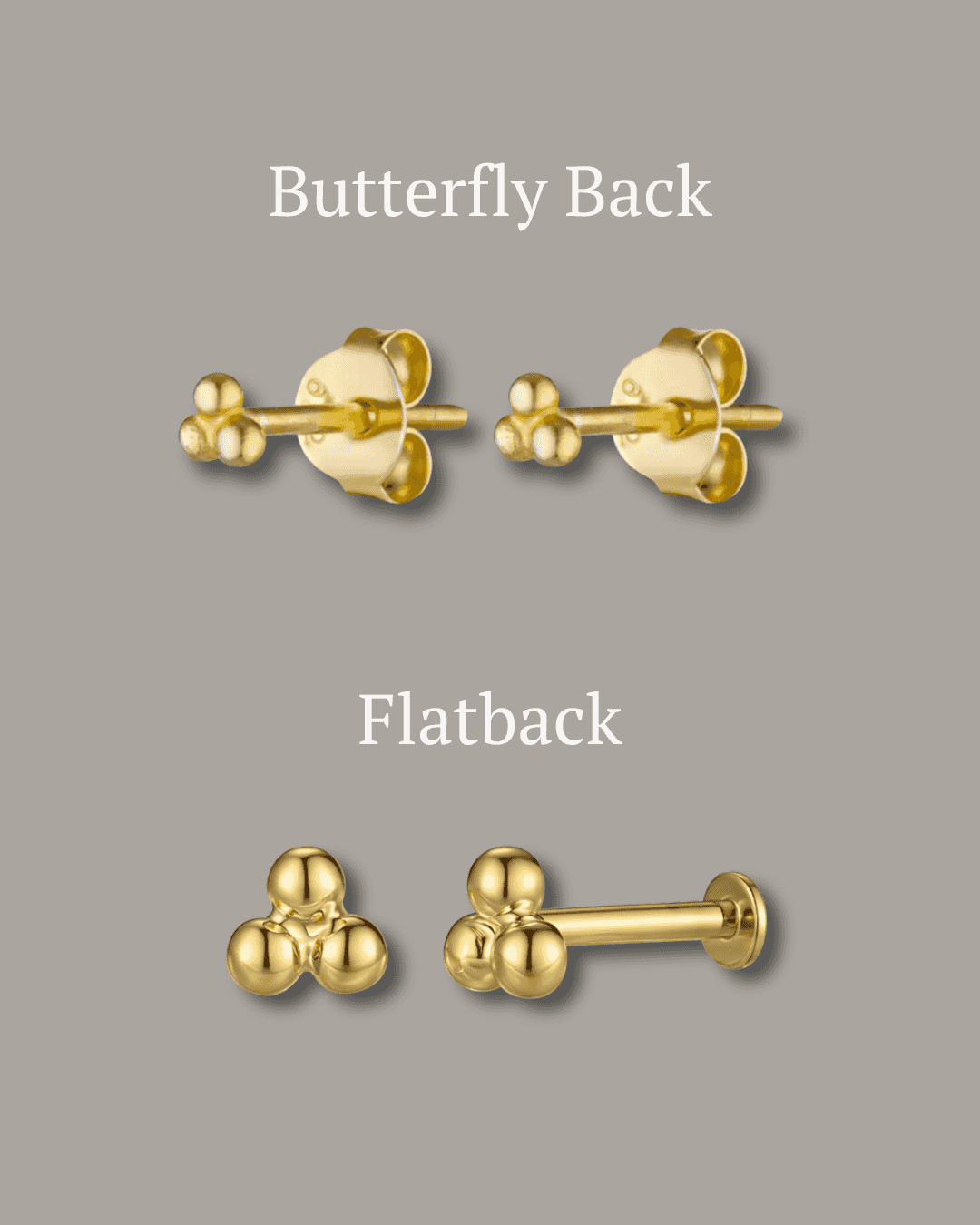
Instead of the familiar butterfly fastening found on many traditional studs, a flat back ends in a smooth disc positioned behind the ear.
This creates a clean, low-profile silhouette.
Depending on the piercing, anatomy and correct fit, flat backs can work particularly well for:
- Lobe piercings
- Second and third lobes
- Helix piercings
- Forward helix piercings
- Flat piercings
- Tragus piercings
- Conch piercings
Their visual simplicity makes them particularly suited to an ear containing several individual pieces.
Each earring can be seen without the composition feeling crowded.
Flatback Earrings vs Butterfly Back Earrings
Both have a place within a jewellery wardrobe.
Butterfly backs
Traditional studs commonly use a post secured behind the ear with a butterfly-shaped fastening.
They are familiar, versatile and particularly common for lobe earrings.
Flat backs
A flat back replaces the butterfly clutch with a smooth disc positioned behind the piercing.
Its low-profile construction makes it a popular option for multiple piercings and several cartilage placements.
Rather than asking which design is universally “better,” consider where the jewellery will sit and how you intend to wear it.
Jewellery begins with the wearer.
VOUS — you.
How to Build a Curated Ear
The most compelling ear stacks rarely look as though every piece was chosen at once.
They evolve.
Start with your anchor
Choose the earring that carries the most visual presence.
It might be:
- A diamond stud
- A sculptural gold earring
- A hoop
- A distinctive motif
Allow the remaining pieces to respond to it.
Change the scale
If every earring has the same visual weight, the ear can feel static.
Pair a larger first-lobe piece with smaller studs as you move upward.
Follow the architecture of your ear
Rather than recreating somebody else's ear stack exactly, work with your individual anatomy.
A placement that looks extraordinary on one ear may sit differently on another.
This is where the idea of VOUS becomes particularly relevant: the person comes before the formula.
Give the jewellery space
A beautiful composition does not require filling every available placement.
Sometimes one unexpected point of light is more powerful than five competing details.
Mix shapes with intention
Round diamonds can sit beside elongated gold forms.
A hoop can contrast with a tiny stud.
Polished gold can meet pavé.
The aim is not perfect symmetry.
It is balance.
Choosing Jewellery for Your Piercing
Beyond design, several practical considerations matter.
Jewellery material
For jewellery worn regularly, choose high-quality materials suitable for the intended piercing and your individual sensitivities.
For new or healing piercings, ask a reputable professional piercer which materials are appropriate rather than selecting solely according to appearance.
Post length
Flat back posts are available in different lengths because ears are not one universal thickness.
The appropriate length varies according to:
- Placement
- Anatomy
- Swelling
- Stage of healing
A professional piercer can measure and fit jewellery appropriately.
Earring scale
Consider the relationship between the jewellery and its location.
A motif that feels delicate in the first lobe may appear comparatively large in a forward helix.
Curated-ear styling is partly the art of proportion.
Can You Use Flatback Earrings in Lobe Piercings?
Yes. Flat back earrings are not exclusively cartilage jewellery.
They can also be worn in compatible lobe piercings and are particularly useful when creating multiple-lobe compositions.
This makes them an interesting bridge between traditional fine earrings and contemporary piercing jewellery.
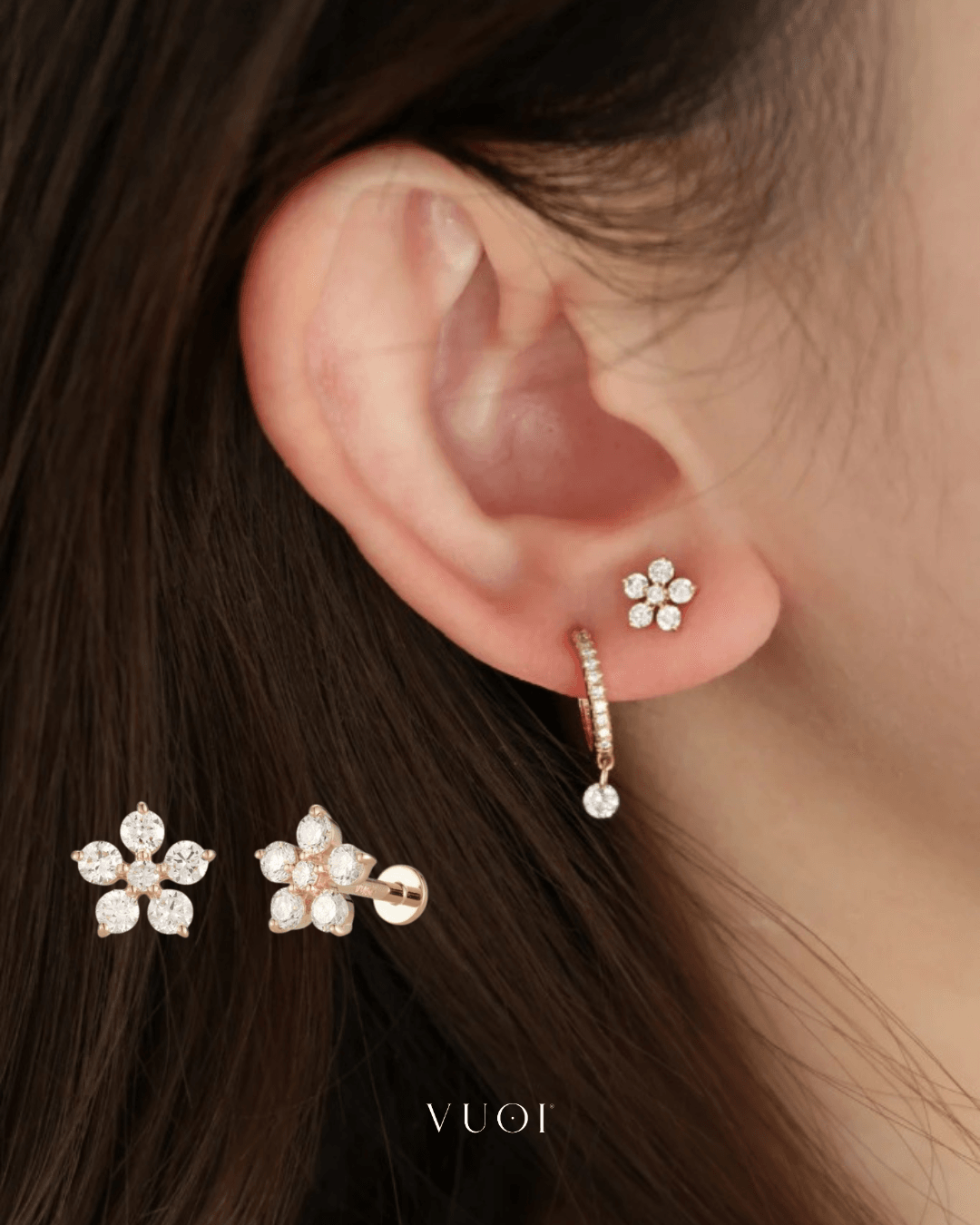
Fleuris Diamond Flatback Earring
$349.00
The fleuris diamond flatback earring blooms with quiet elegance. Six diamonds form a delicate floral design that reflects softness, harmony, and timeless beauty.… read more
What Are the Best Earrings for Cartilage Piercings?
There is no single earring suitable for every cartilage piercing.
Helix, conch, tragus, rook and daith piercings occupy different parts of the ear and may require very different jewellery constructions.
Flat back earrings are commonly associated with placements such as the helix, flat, tragus and conch, while placements including the rook and daith often call for other jewellery forms.
Always let your anatomy and professional piercing advice determine the final choice.
The Ear as a Personal Composition
Jewellery has always offered a way of saying something without speaking.
The curated ear simply brings that idea into a smaller space.
A diamond catches the light. A gold form traces the architecture of the ear. Individual pieces begin to relate to one another.
There is no definitive ear stack. Only the one that feels like you.
FAQs
What are the most popular types of ear piercings?
Popular placements include standard and upper lobe piercings, helix, forward helix, flat, tragus, conch, rook and daith piercings.
Which piercings can wear flat back earrings?
Flat backs are commonly used in suitable lobe, helix, forward helix, flat, tragus and conch piercings. Suitability depends on anatomy, gauge, post length and the piercing itself.
What earrings are best for an ear stack?
A refined ear stack often combines different scales and jewellery types, such as hoops, fine studs and flat back earrings. The best combination is one that works with your anatomy and creates visual balance.
Are flat back earrings only for cartilage?
No. Flat back earrings can also be worn in compatible lobe piercings.
What is the difference between a flat piercing and a flat back earring?
A flat piercing refers to the location of a piercing in the upper flat cartilage of the ear. A flat back earring refers to the jewellery construction and its smooth disc-shaped backing. A flat piercing can often be styled with a flat back earring, but the two terms mean different things.