Table of Contents
Opal: Nature’s Living Light
Some gemstones hold colour. Opal jewellery seems to move with it.
Turn one gently in your hand and a quiet, milky surface can suddenly reveal electric green, ember-red, violet or ocean blue, as though the stone has kept a private sky inside.
But what exactly is opal? Why does it shine from within? Which types are considered the finest, and how can you distinguish natural opal from synthetic, treated or imitation material?
Welcome to the luminous world of opal.
What Is Opal Made Of?
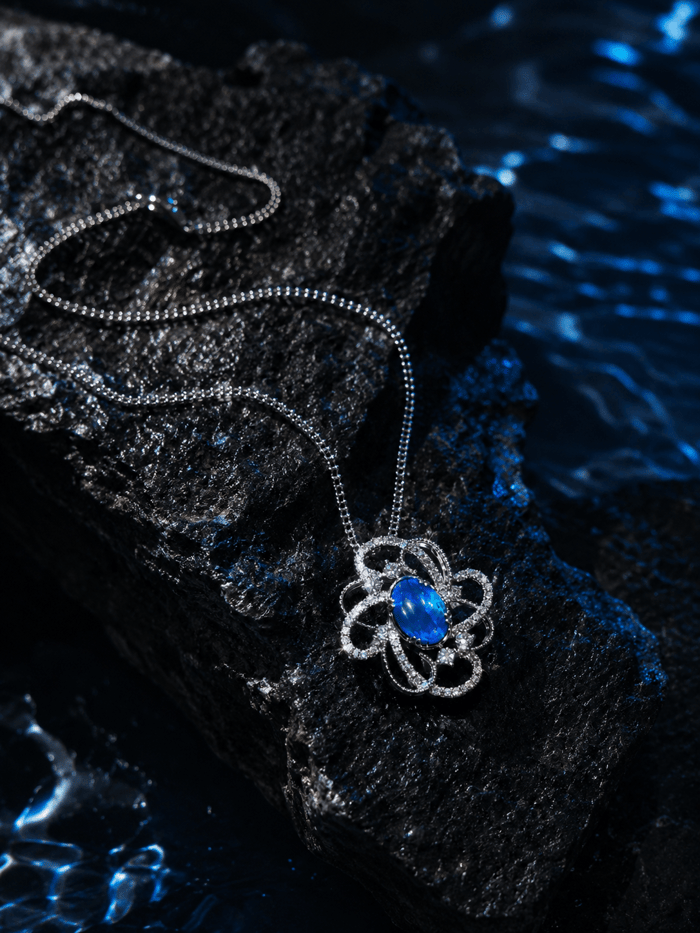
Opal is a form of hydrated silica, silicon dioxide combined with water. Unlike gemstones with a defined crystal structure, such as diamond, sapphire or quartz, opal is amorphous. This means its internal structure is not arranged as a conventional crystal lattice.
Natural opal formed when silica-rich water travelled through cracks, cavities and seams in the earth. As the water gradually evaporated, it left behind layers of silica gel that hardened into opal over immense spans of geological time.
Opal commonly contains around 6–10% water, although the exact amount varies. It measures approximately 5.5–6.5 on the Mohs hardness scale, making it softer and more sensitive to impact, heat and abrupt environmental changes than diamonds or sapphires.
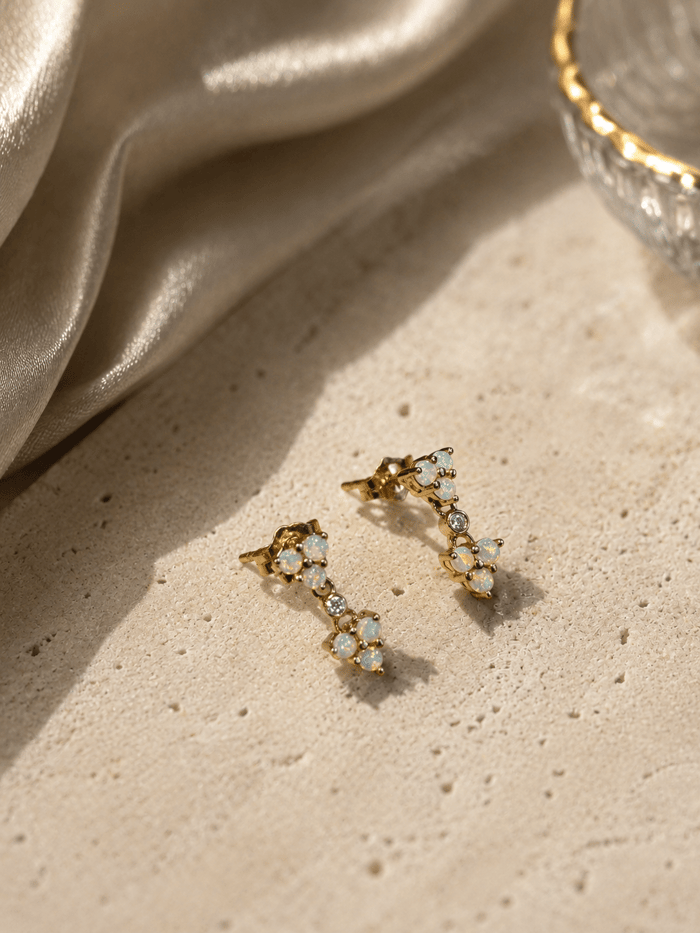
Écho Opal Drop Earrings

$1,590.00
Beauty, repeated. The Écho Opal Drop Earrings feature two mirrored clusters of crystal white opals, three stones each suspended from a stud post and connected by a single bezel-set diamond. The lower cluster echoes the upper perfectly, creating a drop… read more
Why Does Opal Shine from Within?
That mesmerising rainbow is known as play-of-colour.
It is not caused by pigment, glitter or a metallic layer inside the stone. Precious opal contains microscopic spheres of hydrated silica arranged in an exceptionally regular three-dimensional pattern.
When white light enters the stone, the tiny spheres and the spaces between them act like a natural diffraction grating. Light is separated into different wavelengths, creating the shifting spectral colours we see.
The size of the silica spheres influences the colours produced. Smaller spheres generally create violet, blue and green, while larger spheres can reveal yellow, orange and red.
Red play-of-colour requires larger, consistently ordered spheres, which makes it comparatively rare and traditionally highly valued.
As the stone, light or viewer moves, the angle changes. Different wavelengths become visible, making the colours appear to roll, flash or float inside the opal.
It is less like sparkle and more like living light.
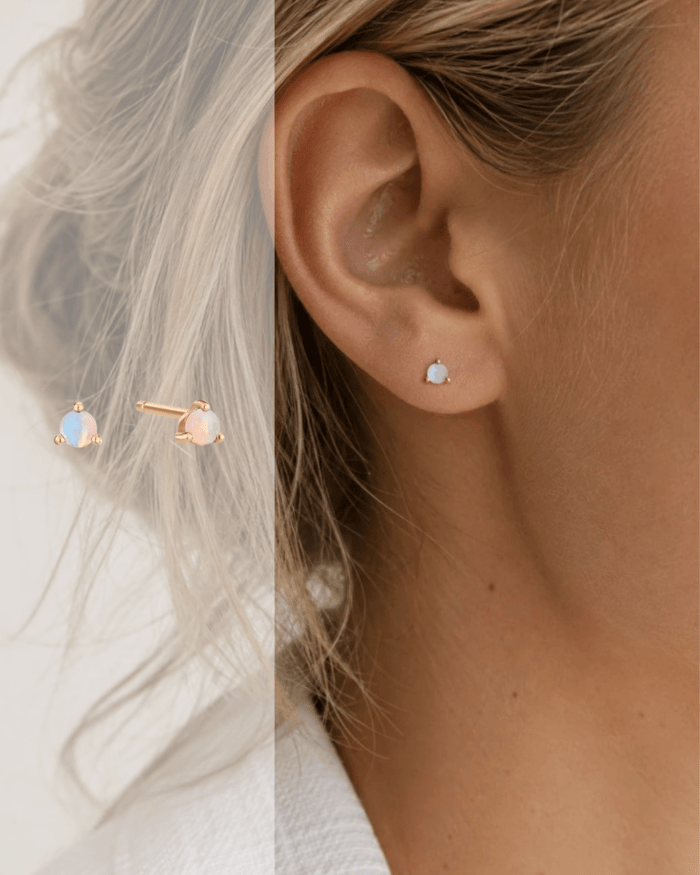
October Birthstone Opal Stud Earring

$199.00
The october birthstone opal stud earring symbolises creativity, intuition, and inner light. Featuring opal in a classic stud silhouette, it reflects fluid energy and soft everyday glow. … read more
Precious Opal vs Common Opal
The opal family is divided into two broad categories.
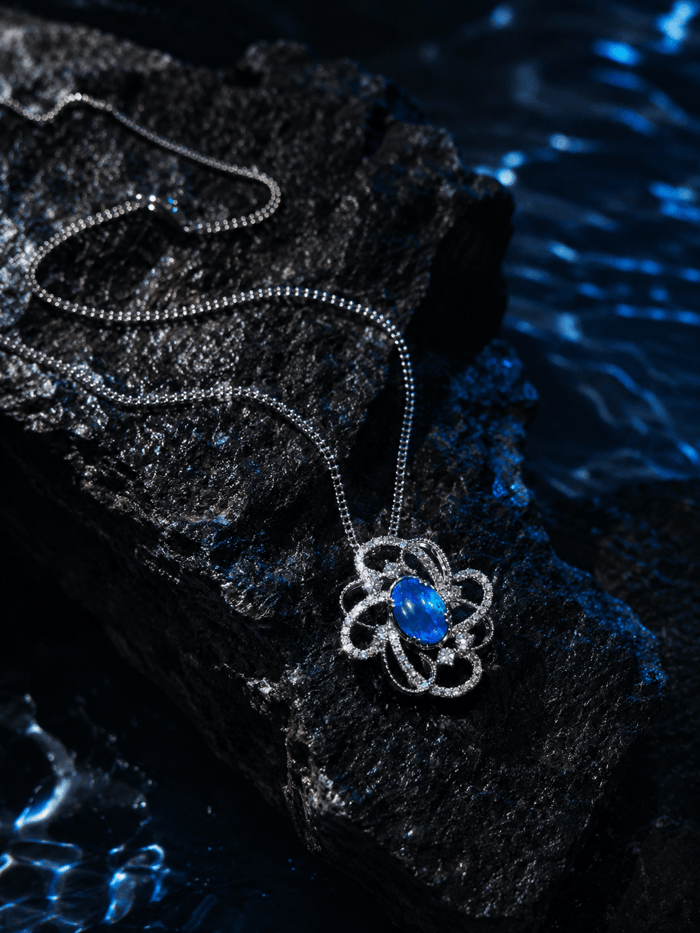
Precious Opal
Precious opal displays play-of-colour, the moving flashes of spectral colour that appear as the stone turns.
Common Opal
Common opal does not display play-of-colour. Instead, it is appreciated for its natural body colour, translucency and softness of tone.
Common opal can be white, blue, green, pink, yellow, orange, brown or colourless. Peruvian pink and blue opals are well-known examples.
Neither category is automatically “better.” Precious opal is generally rarer and more valuable, while a beautifully coloured common opal can be just as meaningful and visually distinctive.
Where Does the Best Opal Come From?
There is no single best origin for every opal.
Quality belongs to the individual stone. Brightness, colour range, pattern, body tone, stability, cut and personal beauty matter more than a country name alone.
However, different origins are known for distinctive varieties.
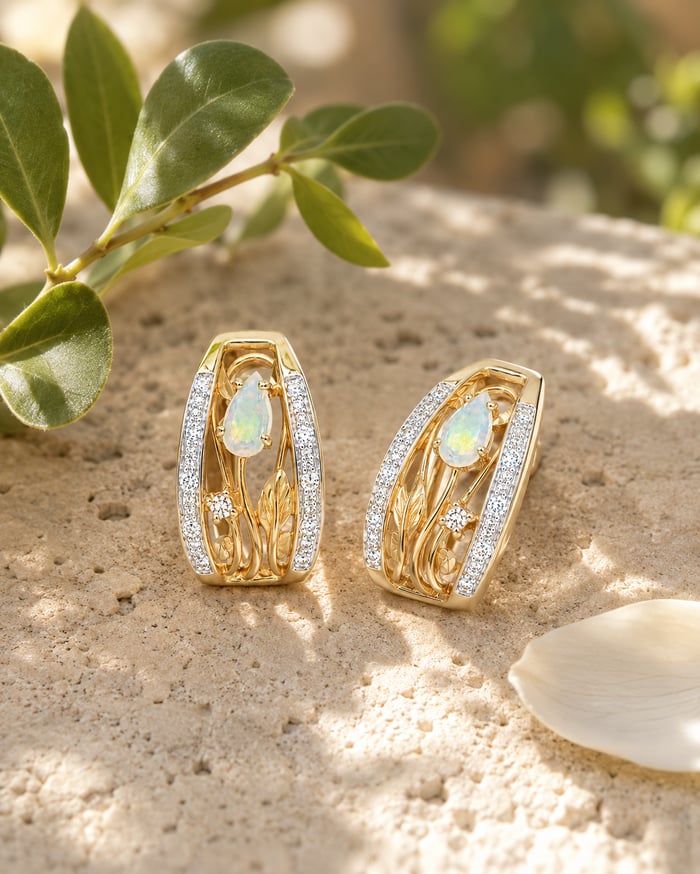
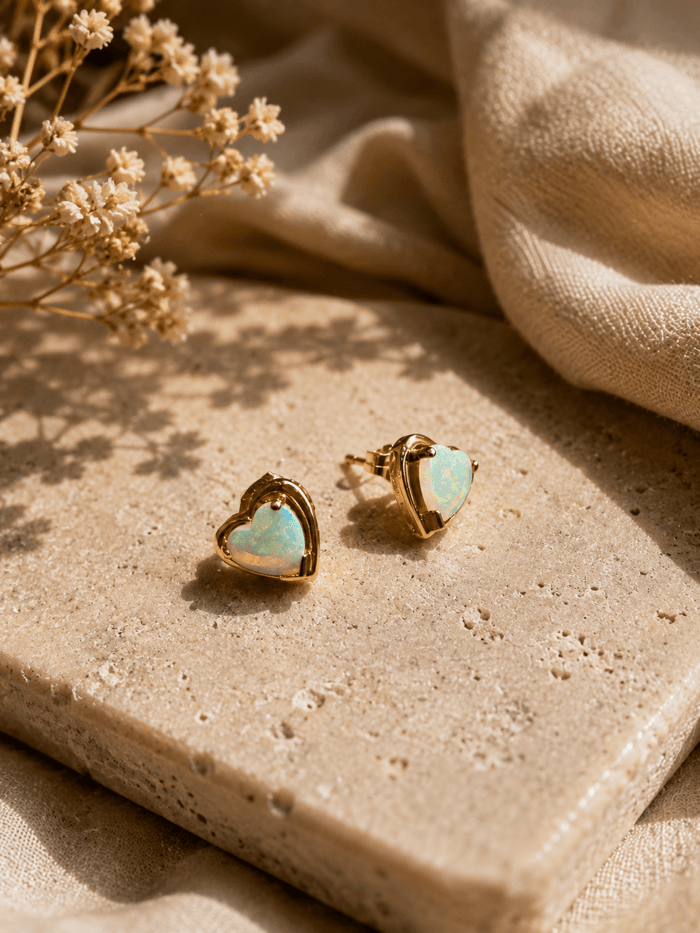
Tulipe Opal Hoop Earrings

$3,690.00
Nature, refined. The Tulipe Opal Hoops frame a sculptural gold garden against a backdrop of pavé diamonds - a pear-cut opal at the centre, alive with green and gold fire, flanked by a single diamond accent and intricate hand-engraved leaf… read more
Tulipe Opal Hoop Earrings

$3,690.00
Nature, refined. The Tulipe Opal Hoops frame a sculptural gold garden against a backdrop of pavé diamonds - a pear-cut opal at the centre, alive with green and gold fire, flanked by a single diamond accent and intricate hand-engraved leaf… read more
Australia
Australia is the historic benchmark for precious opal and produces the great majority of the world’s supply.
Its most famous regions include:
Lightning Ridge, New South Wales: black and dark opal
Coober Pedy, South Australia: white, light and crystal opal
Andamooka, South Australia: crystal, light and matrix opal
Queensland: boulder and matrix opal
White Cliffs, New South Wales: light opal and rare opalised fossils
Australian opal generally formed within deeply weathered sedimentary rock. Silica-rich groundwater became trapped in cavities, faults and seams, where it slowly hardened into opal.
Australia is also famous for opalised fossils, in which ancient shells, bones, wood and other organic materials were gradually replaced by opal.
Ethiopia
Ethiopia, particularly the Wollo region is known for bright crystal and white opal with intense multi-coloured play.
Much of this material is hydrophane, meaning it is porous enough to absorb water and other liquids. When wet, its transparency and colours may temporarily change. It can also absorb oils, dyes and chemicals.
Ethiopian opal can be exceptionally beautiful, but it requires careful handling and clear treatment disclosure.
Mexico
Mexico is celebrated for transparent fire opal in yellow, orange and red tones.
Some Mexican fire opals display play-of-colour, while others are admired for their warm, glowing body colour. Fine transparent stones may be faceted to maximise their brilliance.
Brazil
Brazil produces white and crystal opal, sometimes in larger sizes. Fine Brazilian material can show excellent brightness and stability, although it is less commonly encountered than Australian or Ethiopian opal.
Honduras
Honduras is known for dark volcanic matrix opal. Small flashes of colour appear against naturally dark host rock, creating an effect reminiscent of stars scattered across a night sky.
Peru
Peru is famous for blue and pink common opal.
These stones generally do not show play-of-colour. Their beauty lies in their serene, pastel body colour and soft translucency.
United States
Opal is found in several western states, including Oregon, Nevada and Idaho. American deposits produce precious opal as well as colourful common varieties.
The VUOI View
The finest opal is not simply the darkest, rarest or most expensive.
It is the one that changes when you move and somehow changes something in you.
Every opal carries its own private landscape, flashes of colour, shifting light and unexpected details revealed only with time. Some glow softly, while others arrive with fire. What matters most is the feeling that draws you closer and makes one particular stone feel unmistakably yours.
Like the person who wears it, an opal cannot be understood from a single angle. It holds contrast, movement and mystery, transforming with the light while remaining entirely itself. Perhaps that is its quiet lesson: beauty does not need to be fixed to be real.
Choose with knowledge, then listen to instinct. Let colour, character and emotion guide you beyond rarity or convention. A true opal never shows you everything at once and that is precisely where its magic begins.
Oui, à vous.
FAQs
What is opal made from?
Opal is made from hydrated silica, meaning silica combined with water. Unlike crystalline gemstones, opal has an amorphous internal structure and commonly contains around 6–10% water.
Why does opal shine in different colours?
Precious opal contains microscopic silica spheres arranged in an orderly pattern. When light enters the stone, this structure separates it into spectral colours. The shifting rainbow effect is known as play-of-colour.
How can you tell if an opal is real?
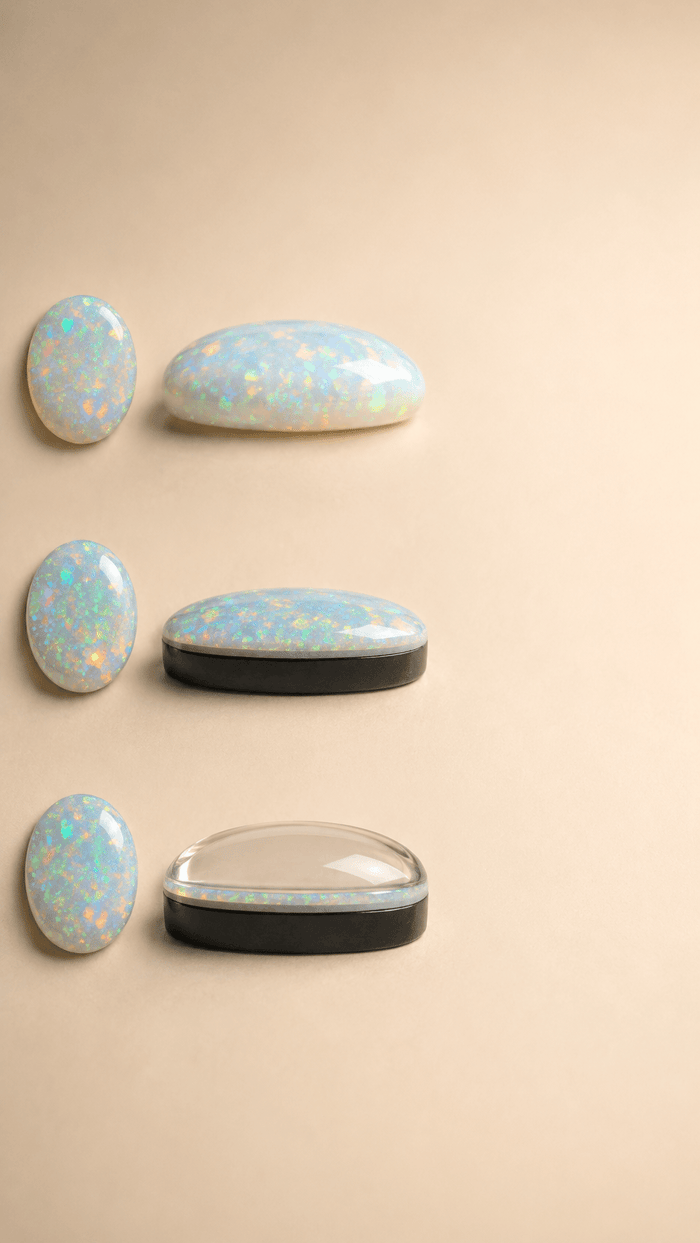
Examine the stone from the front, side and back. Natural opal generally has irregular, dimensional colour patterns that change as it moves. Straight layers may indicate a doublet or triplet, while perfectly repeated patterns may suggest synthetic material. For valuable opals, an independent gemological report is the most reliable confirmation.
What is the difference between natural and synthetic opal?
Natural opal forms within the earth over a long geological period. Synthetic opal is produced in a laboratory using an engineered internal structure. Synthetic opal can display genuine play-of-colour, but it must be clearly disclosed and is generally worth less than comparable natural opal.
Are opal doublets and triplets fake?
Not exactly. Doublets and triplets usually contain a thin layer of genuine natural opal combined with a backing and, for triplets, a transparent top. They are assembled stones rather than solid opals and should be disclosed and priced accordingly.
What is the rarest type of opal?
Fine black opal is generally considered the rarest and most valuable type. Stones with a dark body tone, bright play-of-colour, strong red flashes and colour visible from several angles are particularly prized.
Where does the best opal come from?
Australia is the historic benchmark for precious opal. Lightning Ridge is famous for black opal, Coober Pedy for white and light opal, and Queensland for boulder opal. Ethiopia is also known for exceptionally bright crystal and hydrophane opal, while Mexico is celebrated for fire opal.
Does fire opal always have rainbow colours?
No. Fire opal is named for its yellow, orange or red body colour. Some fire opals display play-of-colour, while others are valued entirely for their warm, glowing colour.
Why did my Ethiopian opal change after getting wet?
Many Ethiopian opals are hydrophane, meaning they can absorb water. This may temporarily change the stone’s transparency and play-of-colour. Allow it to dry naturally and slowly, without applying direct heat.
Can opal be worn every day?
Yes, but it should be worn thoughtfully. Opal earrings and pendants are suitable for frequent wear, while an everyday opal ring benefits from a protective setting. Remove opal jewellery before exercising, cleaning, gardening or other impact-heavy activities.
How should opal jewellery be cleaned?
Clean opal gently with lukewarm water, mild soap and a soft cloth or very soft brush. Avoid steam cleaners, ultrasonic machines, harsh chemicals and sudden temperature changes. Doublets, triplets and hydrophane opals should not be soaked.
Can opal go in water?
Brief contact with water may not harm every solid opal, but soaking is not recommended. Hydrophane opal can absorb liquid, while water may weaken the adhesive used in doublets and triplets.
What determines an opal’s value?
An opal’s value depends on the strength and range of its play-of-colour, pattern, brightness, body tone, colour coverage, directionality, size, cut, condition and any treatments. A smaller stone with vivid colour can be more valuable than a larger opal with weak flashes.
Is opal an October birthstone?
Yes. Opal is one of October’s traditional birthstones and is associated with creativity, hope, emotional expression and transformation. However, anyone can wear opal—regardless of their birth month.
Is opal unlucky if you were not born in October?
No. The idea that opal brings bad luck is a relatively modern superstition rather than an ancient belief. Throughout much of history, opal was considered a symbol of hope, protection and good fortune because it appeared to contain every colour.