Table of Contents
- Sapphire: The Birthstone of September
- The Science Behind Sapphire
- A Spectrum Beyond Blue
- The Meaning of Sapphire
- Where Do Sapphires Come From?
- Understanding Sapphire Quality
- Are Sapphires Heat Treated?
- Is an Untreated Sapphire Better?
- Why Sapphire Is Suited to Everyday Jewellery
- How to Choose a Sapphire
- Caring for Sapphire Jewellery
- Sapphire as a Modern Heirloom
- FAQs
Known as the September birthstone, sapphire has been treasured for centuries for its remarkable colour, durability and symbolism. Most often recognised in its signature blue, sapphire actually exists in an extraordinary spectrum of colours from soft pink and golden yellow to green, violet and colourless varieties.
Beyond its beauty, the September birthstone is equally fascinating from a gemological perspective. Its colour, origin, inclusions, treatments and cut all contribute to the individuality of each sapphire.
Here is a closer look at the September birthstone, from how sapphires form to what to consider when choosing one for fine jewellery.
Sapphire: The Birthstone of September
Sapphire is the traditional birthstone for September and belongs to the mineral family known as corundum.
Interestingly, sapphire and ruby come from the same mineral family. Red gem-quality corundum is classified as ruby, while corundum in other colours is generally known as sapphire.
This means sapphire is not simply a blue gemstone.
Depending on the trace elements present as the crystal forms, sapphires can appear blue, pink, yellow, orange, green, violet, purple or even colourless.
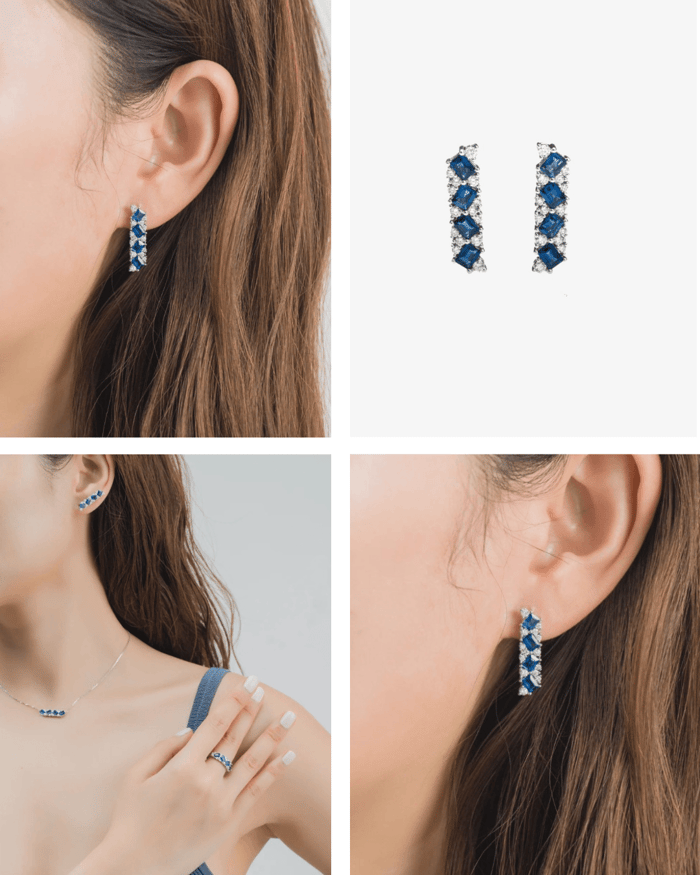
Azure Sapphire Earrings

$8,880.00
A flow of deep blue brilliance. The azure sapphire earrings feature sapphire toned stones framed by radiant diamonds. Sleek and elongated, they move with fluid elegance and quiet strength. Sold as a pair. … read more
Azure Sapphire Bracelet

$4,980.00
A current in motion. The azure sapphire bracelet features sapphire toned stones framed by radiant diamonds, suspended along a delicate double chain.… read more
Azure Sapphire Necklace

$4,380.00
A line of flowing blue brilliance. The azure sapphire necklace features sapphire toned stones framed by radiant diamonds, arranged in a fluid horizontal line. Sleek, refined, and effortlessly luminous.… read more
Azure Sapphire Ring

$4,580.00
A tide of deep blue brilliance. The azure sapphire ring flows with sapphire toned stones framed by radiant diamonds, creating a luminous band of depth and movement. Bold, refined, and effortlessly powerful.… read more
The Science Behind Sapphire
In its pure form, corundum is colourless.
The colours seen in natural sapphires are created by small amounts of trace elements within the crystal structure. In blue sapphire, for example, interactions involving iron and titanium contribute to its characteristic colour.
Even subtle differences in these elements can produce dramatically different results.
One sapphire may appear pale and luminous, while another reveals an intense, velvety blue. Some stones lean slightly violet; others can have subtle green undertones.
It is this natural variation that makes coloured gemstones especially individual.
September Birthstone Sapphire Huggie Earring

$499.00
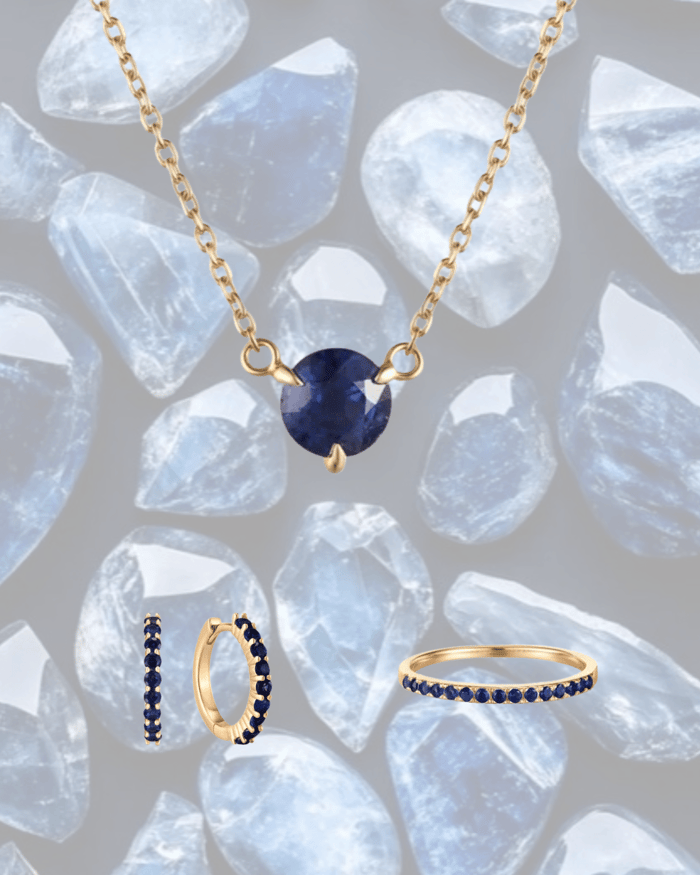
The september birthstone sapphire huggie earring reflects wisdom, clarity, and calm confidence. Sapphire is known for supporting truth, focus, and steady inner strength.… read more
September Birthstone Sapphire Solitaire Necklace

$899.00
Set with a deep blue sapphire, the September birthstone sapphire solitaire necklace symbolises wisdom, loyalty, and calm. Suspended on a fine gold chain, it rests close to the heart with quiet radiance. A timeless piece to wear daily or gift… read more
September Birthstone Eternity Ring

$799.00
The september birthstone eternity ring symbolises wisdom, clarity, and inner truth. Set with September’s birthstone in an endless band, it reflects continuity and quiet strength. Resizing is available and can be completed within 3 business days.… read more
A Spectrum Beyond Blue
Although blue remains the colour most strongly associated with sapphire, the gemstone has a much broader palette.
Sapphires in colours other than blue are often described as fancy sapphires.
Pink Sapphire
Pink sapphires can range from delicate blush tones to vivid, saturated pink. They offer a softer and often more contemporary interpretation of sapphire.
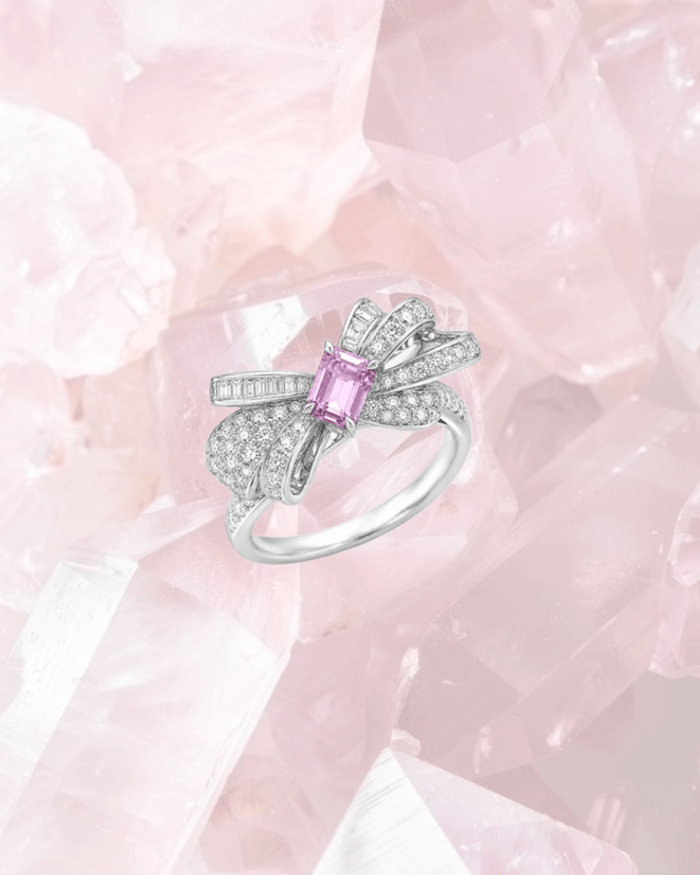
Rosée Sapphire Ring

$7,500.00
The colour of first light - soft, warm, and impossible to look away from. The Aurore Sapphire Ring is the kind of piece you put on and forget to take off. Wear it alone on a bare hand for quiet… read more
Yellow Sapphire
Yellow sapphires range from pale, luminous shades through to richer golden tones. Their warmth can bring a distinctive brightness to fine jewellery.
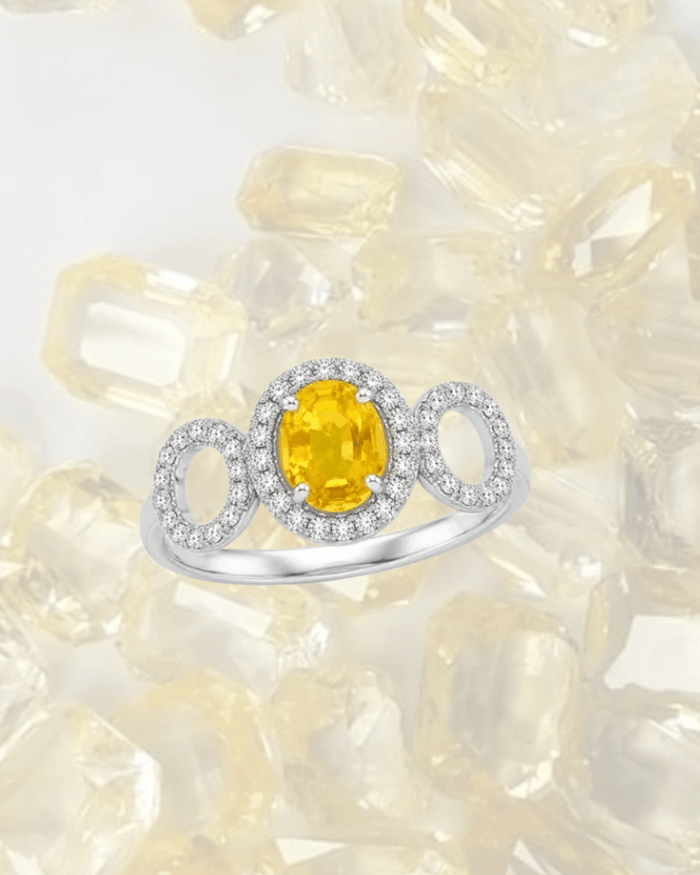
Soleil Oui Ring

$3,680.00
A one-of-a-kind yellow sapphire ring made to glow with confidence, joy, and inner fire. Set in a luminous diamond halo with signature open-circle details, its golden centre catches the light like a private sunrise - radiant, rare, and deeply personal.… read more
Green Sapphire
Less traditional but increasingly appreciated, green sapphire can appear in subtle grey-green, blue-green or richer forest tones.
White Sapphire
Colourless corundum is commonly known as white sapphire. Its clean, understated appearance makes it another expression of the same sapphire family.
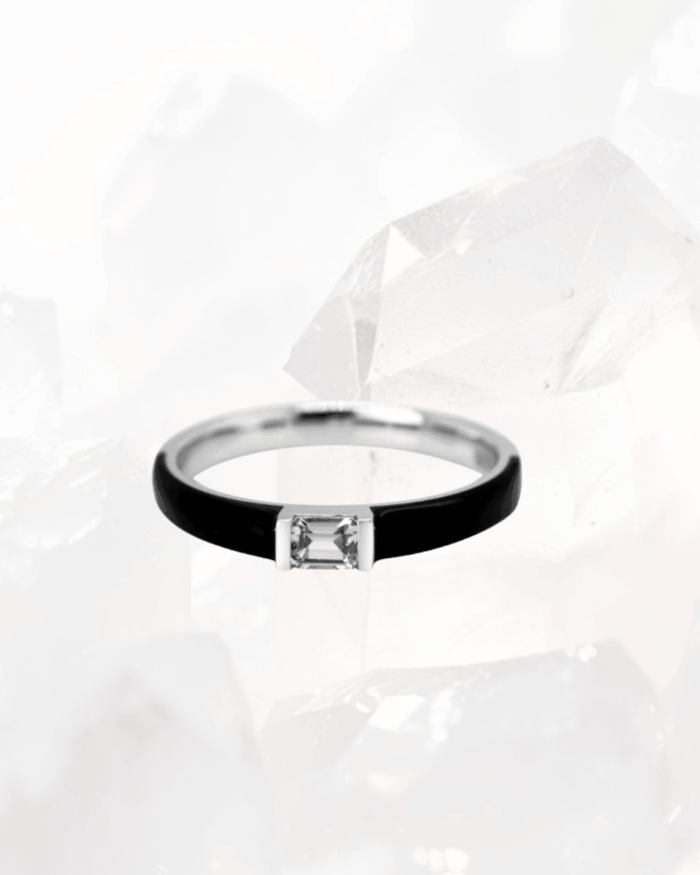
Baguette Enamel Ring

$899.00
The Baguette Enamel Ring pairs sleek black enamel with a striking baguette cut sapphire at its centre. Its clean silhouette highlights the crisp geometry of the stone with understated brilliance.… read more
Padparadscha Sapphire
One of sapphire's most distinctive varieties is padparadscha sapphire, prized for its unusual combination of pink and orange tones.
Fine examples are particularly rare, making padparadscha one of the most sought-after colours within the sapphire family.
The Meaning of Sapphire
Sapphire has carried symbolic meaning throughout history.
The gemstone has traditionally been associated with truth, sincerity, loyalty, wisdom and faithfulness, contributing to its long-standing use in meaningful and ceremonial jewellery.
Today, those associations continue, but the meaning of sapphire can also be deeply personal.
For someone born in September, it may represent their birth month. For someone else, a sapphire might mark an anniversary, a relationship, a personal milestone or simply an appreciation for a particular colour.
The significance of a gemstone often develops through the life lived with it.
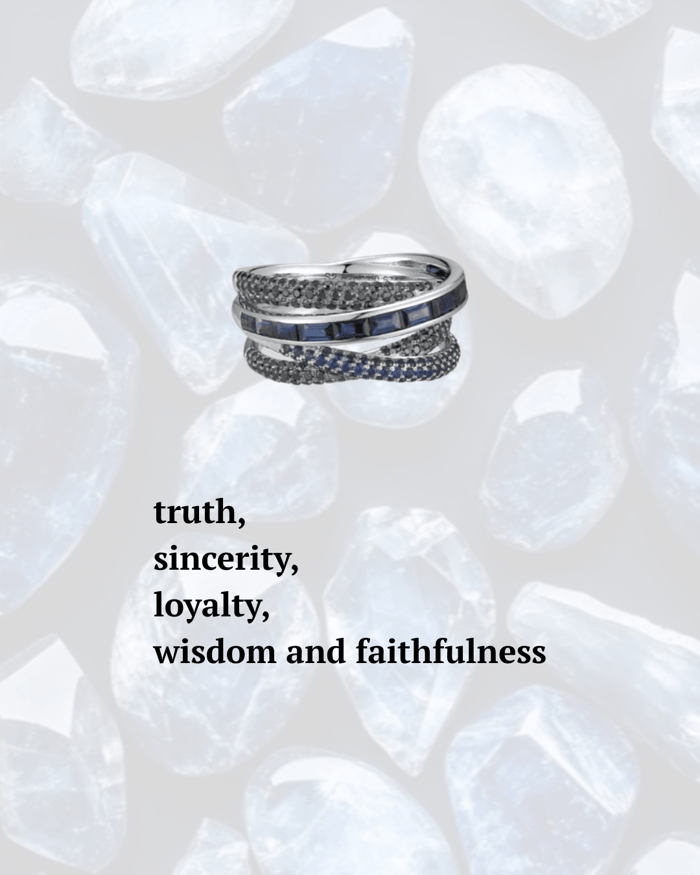
Midnight Ring

$4,080.00
Inspired by Prana, the life force within - this piece channels energy in its deepest, most magnetic form. Intertwining bands of sapphire and black diamond reflect intuition, strength, and quiet power. Dark, luminous, and ever-present - like energy after nightfall.… read more
Where Do Sapphires Come From?
Natural sapphires are found in several regions around the world.
Historically important sources include Sri Lanka, Myanmar and Kashmir, while sapphires are also found in countries including Madagascar, Australia, Thailand and Cambodia, as well as areas of East Africa and the United States.
Certain origins have become particularly famous for specific characteristics.
Kashmir sapphires, for example, have historically been admired for their rich, velvety blue appearance, while Sri Lanka has a long history of producing sapphires across a wide range of colours.
Origin can influence the rarity and value of exceptional gemstones, but it is only one aspect of quality.
Every sapphire should ultimately be considered individually.
Understanding Sapphire Quality
When evaluating a sapphire, several characteristics work together to determine its beauty and value.
These include colour, clarity, cut and carat weight.
Colour
Colour is one of the most important factors in evaluating sapphire.
Gemologists consider its:
- Hue — the dominant colour of the stone
- Tone — how light or dark the colour appears
- Saturation — the intensity or strength of the colour
In blue sapphire, vivid and well-balanced colour is often highly prized.
However, colour preference is also personal. Some people are drawn to deep, saturated blues, while others prefer lighter, softer tones.
The most valuable colour on paper is not necessarily the colour you will love most.
Clarity
Natural sapphires often contain internal characteristics known as inclusions.
These may include tiny mineral crystals, fine needles or other features created during the gemstone's natural formation.
Unlike diamonds, sapphires are not generally expected to be completely free of inclusions.
What matters is how those inclusions affect the stone's overall appearance, transparency and durability.
In some cases, fine inclusions can even contribute to the distinctive character of a sapphire.
Cut
The cut of a sapphire influences both its appearance and the way it displays colour.
A skilled gemstone cutter considers the shape of the original crystal, its colour distribution and how light will travel through the finished stone.
Sapphires may also display colour zoning, where colour is distributed unevenly through the crystal. The orientation of the cut can help minimise visible zoning and present the most attractive colour when the gemstone is viewed face-up.
The result is a balance between technical precision and the natural character of the stone.
Carat Weight
Carat refers to the weight of a gemstone rather than simply its physical size.
Two sapphires with the same carat weight can appear quite different in dimensions depending on their proportions and cut.
Larger sapphires with exceptional colour and clarity are naturally rarer, meaning size can have a significant influence on value when combined with high quality.
Are Sapphires Heat Treated?
Many natural sapphires available today have undergone heat treatment.
Heating is a widely used and accepted treatment in the gemstone industry and may be used to enhance a sapphire's colour or improve its apparent clarity.
A heat-treated natural sapphire is still a natural sapphire.
However, treatment status matters because it can influence rarity and value. Fine sapphires that show no evidence of heat treatment can be especially rare and may command a premium.
Other treatments also exist, including diffusion and fracture filling, so it is important to understand how a sapphire has been treated before purchasing it.
For significant gemstones, an independent gemological laboratory report can provide valuable information about whether the stone is natural, whether treatments have been detected and, in some cases, its likely geographic origin.
Is an Untreated Sapphire Better?
Not necessarily.
An untreated sapphire may be rarer, particularly when it possesses exceptional natural colour and clarity.
But treatment status is only one part of the picture.
A beautifully coloured heat-treated sapphire may be more visually appealing than an untreated sapphire with weaker colour.
Rather than treating one characteristic as a measure of quality on its own, it is better to consider the sapphire as a whole — its colour, cut, clarity, size, treatment and, most importantly, how it looks to you.
Why Sapphire Is Suited to Everyday Jewellery
Sapphire is not only beautiful; it is also exceptionally durable.
It ranks 9 on the Mohs scale of mineral hardness, placing it just below diamond.
This makes sapphire particularly well suited to jewellery intended for regular wear, including rings, earrings, necklaces and bracelets.
Its durability is also one reason sapphire has long been chosen for engagement rings and heirloom jewellery.
However, hardness does not mean indestructible. Like any fine gemstone, sapphire can still be damaged by a strong impact, and the precious metal setting surrounding it also needs care.
How to Choose a Sapphire
Choosing a sapphire is partly about understanding gemology and partly about personal response.
Begin with colour.
Do you prefer something deep and saturated, or lighter and more luminous? Are you naturally drawn to classic blue, or does an unexpected pink, yellow or green feel more distinctive?
Then look more closely at the gemstone.
Consider:
- The strength and balance of its colour
- How lively the stone appears in different lighting
- Whether inclusions are noticeable or distracting
- The proportions and quality of the cut
- Carat weight and visible size
- Whether the sapphire has undergone treatment
- Whether geographic origin is important to you
- How the stone works within the jewellery design
For important purchases, ask for clear information about treatments and any available gemological certification.
And allow yourself to respond instinctively.
Often, the right gemstone is simply the one you keep returning to.
Caring for Sapphire Jewellery
Sapphire's durability makes it relatively easy to care for, but fine jewellery still benefits from thoughtful maintenance.
For most untreated and conventionally heat-treated sapphires, gentle cleaning with warm water, mild soap and a soft brush is suitable.
To care for sapphire jewellery:
- Store pieces separately to minimise scratching.
- Avoid strong impacts against hard surfaces.
- Remove jewellery when using harsh household chemicals.
- Have frequently worn rings and settings checked periodically by a professional jeweller.
- If you are unsure about your sapphire's treatment history, seek professional advice before using ultrasonic or steam cleaning.
A few simple habits can help preserve both the gemstone and its setting for years to come.
Sapphire as a Modern Heirloom
Part of sapphire's enduring appeal is its ability to balance beauty with longevity.
Its durability allows it to be worn regularly. Its spectrum of colours gives each stone individuality. And its long history brings a sense of permanence without requiring jewellery to feel traditional.
An heirloom does not always need to be something inherited.
It can begin with a piece chosen today.
A sapphire marking a September birthday. An anniversary. An achievement. A relationship. Or simply a gemstone whose colour felt impossible to forget.
Over time, the jewellery gathers its own meaning.
And that may be the most beautiful quality of all.
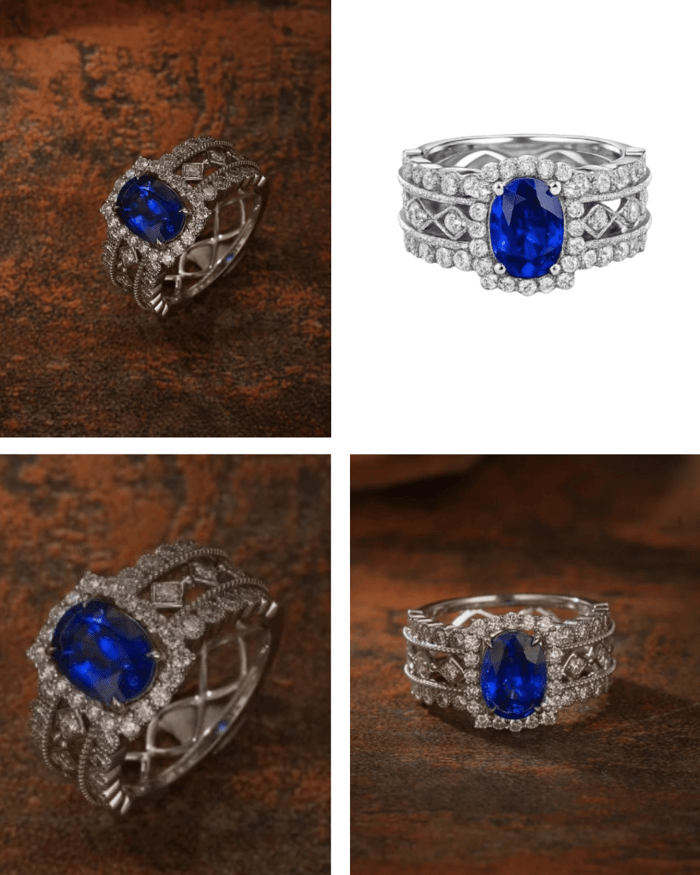
The Sovereign Royal Blue Sapphire Ring

$0.00
A Ring Made Only for You Some pieces are not simply purchased - they are created. The Sovereign is a bespoke ring centred on a vivid royal blue sapphire, handcrafted to your exact vision by the artisans at VUOI Jewellery.… read more
FAQs
What is the birthstone for September?
Sapphire is the traditional birthstone for September. Blue is its best-known colour, although sapphires naturally occur in many other shades.
What does the September birthstone symbolise?
Sapphire has traditionally been associated with truth, loyalty, sincerity, wisdom and faithfulness.
Are all sapphires blue?
No. Sapphires can also be pink, yellow, orange, green, violet, purple and colourless. These non-blue varieties are often referred to as fancy sapphires.
Is sapphire suitable for everyday wear?
Yes. Sapphire ranks 9 on the Mohs hardness scale, making it one of the hardest gemstones commonly used in fine jewellery. Thoughtful care is still recommended.
Are heat-treated sapphires real sapphires?
Yes. A heat-treated natural sapphire remains a natural sapphire. Heating is commonly used to enhance colour or clarity, although treatment status should always be disclosed.