Table of Contents
- How Long Does an Ear Piercing Take to Heal?
- Ear Piercing Aftercare Dos
- Ear Piercing Aftercare Don’ts
- What Is Normal While an Ear Piercing Heals?
- Signs an Ear Piercing May Be Infected
- Irritation or Infection: What Is the Difference?
- Choosing Jewellery After Your Piercing Has Healed
- Why Choose Flat Back Earrings?
- FAQs
Ear piercing aftercare is the secret to helping a new piercing heal comfortably and look its best. Although a fresh piercing may feel like the beginning of a new jewellery moment, it is also a small healing wound that needs cleanliness, patience and protection.
Whether you have chosen a classic lobe piercing, a delicate helix or a carefully curated ear stack, following the right ear piercing aftercare routine can help minimise irritation and support healthy healing.
Below, discover the essential dos and don’ts for caring for a new ear piercing.
Good ear piercing aftercare creates the foundation for comfortable, effortless ear styling.
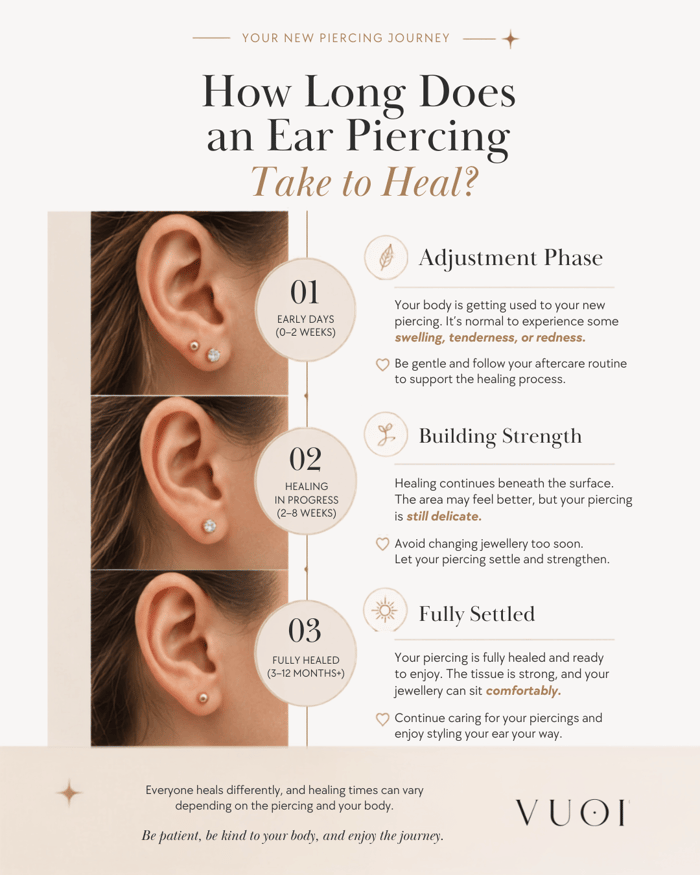
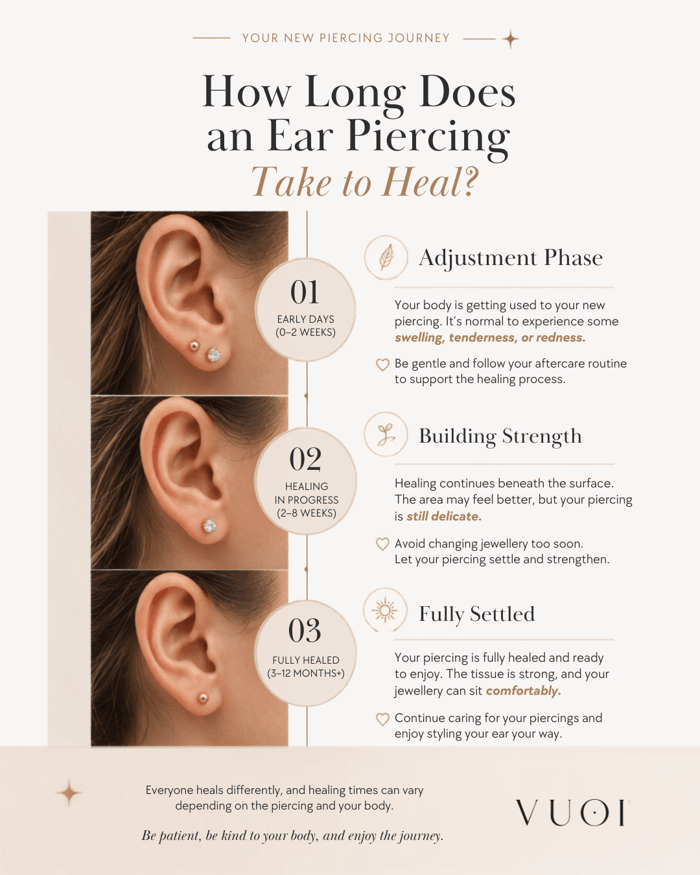
How Long Does an Ear Piercing Take to Heal?
Healing time depends on the location of the piercing, your body and how consistently you follow your piercer’s advice.
As a general guide:
- Earlobe piercings: Usually need around six to eight weeks for initial healing.
- Cartilage piercings: May take six to twelve months to heal fully.
- Multiple piercings: May need additional time, particularly when several placements are healing together.
A piercing can look healed on the outside while the tissue inside remains delicate. Avoid changing your jewellery until your professional piercer confirms that the piercing is ready.
Your body sets the timeline. Do not rush it.
Ear Piercing Aftercare Dos
Do Wash Your Hands Before Touching Your Piercing
Fresh piercings should be touched as little as possible. When you need to clean the area, wash and dry your hands thoroughly first.
Unwashed hands can transfer bacteria, natural oils and skincare residue to the piercing, potentially causing irritation.
Treat your new piercing like fresh, delicate skin: clean hands only.
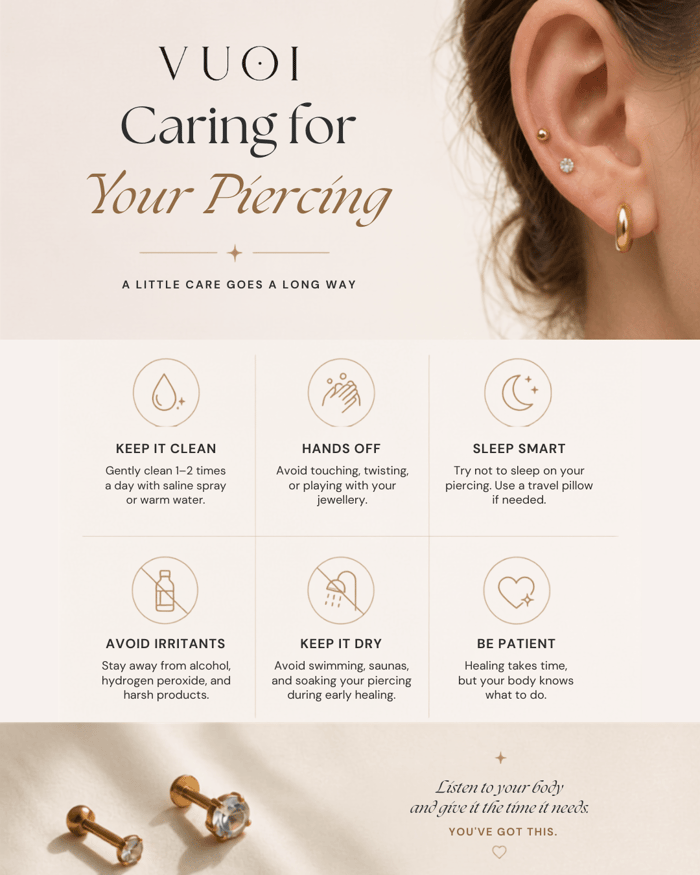
Do Clean It With Sterile Saline
One of the most important steps in ear piercing aftercare is gentle, consistent cleaning.
Use a packaged sterile saline wound wash recommended by your piercer. Look for a simple formula containing 0.9% sodium chloride without fragrances, moisturisers or unnecessary additives.
To clean your piercing:
- Wash and dry your hands.
- Spray the front and back with sterile saline.
- Allow any buildup to soften naturally.
- Gently dry the area with clean disposable gauze or paper towel.
Avoid forcefully removing crusting or scrubbing the piercing. Follow the cleaning frequency recommended by your piercer, as over-cleaning can also dry and irritate the skin.
Do Leave the Original Jewellery in Place
Keep your initial jewellery in place throughout the recommended healing period unless a qualified piercer or healthcare professional tells you otherwise.
Removing jewellery too early may cause the piercing channel to shrink or close. Attempting to reinsert jewellery can damage the healing tissue and introduce bacteria.
Your piercer may recommend professional downsizing if a longer post was used to accommodate initial swelling. This should be completed at the appropriate stage rather than changing the jewellery yourself.
Do Keep the Piercing Dry
After showering or cleaning, gently dry the area with fresh disposable gauze or paper towel.
Reusable towels can hold bacteria and may catch on the jewellery. Avoid leaving the piercing damp beneath wet hair, headphones or clothing.
Do Protect It While Sleeping
Pressure is a common cause of irritation, especially with cartilage piercings.
Avoid sleeping directly on your new piercing. A travel pillow or specialised piercing pillow can help keep pressure away from the ear while allowing you to rest comfortably.
Change your pillowcase regularly and keep your hair away from the piercing whenever possible.
Do Clean Items That Touch Your Ears
Your phone, glasses and headphones come into contact with your ears more often than you may realise.
During the healing process, regularly clean:
- Mobile phones
- Earbuds and headphones
- Glasses
- Hats and helmets
- Pillowcases
- Hairbrushes
- Hair accessories
Keeping these everyday items clean is an easy but often overlooked part of good ear piercing aftercare.
Ear Piercing Aftercare Don’ts
Don’t Twist or Rotate the Jewellery
Despite older advice, a new piercing does not need to be rotated.
Twisting the jewellery can disturb the healing tissue, create tiny tears and carry bacteria into the piercing channel. Leave the jewellery still and allow your body to heal around it naturally.
The less unnecessary movement, the better.
Don’t Use Alcohol or Hydrogen Peroxide
Harsh antiseptics can dry out and damage the delicate tissue surrounding a fresh piercing.
Unless directed by a healthcare professional, avoid:
- Rubbing alcohol
- Hydrogen peroxide
- Tea tree oil
- Iodine
- Harsh antibacterial cleansers
- Thick creams and ointments
- Fragranced skincare
Sterile saline is generally a gentler option for regular cleaning.
Don’t Pick at Crust or Buildup
A small amount of pale fluid or light crusting can occur while the piercing heals.
Do not scratch, pick or force it away. Apply sterile saline and allow the buildup to soften. Anything ready to come away should release gently without pulling at the skin.
Don’t Change the Jewellery Too Soon
We know - the temptation to style your new piercing is real. However, changing jewellery before the channel has healed can cause irritation and delay the process.
Wait until:
- Pain and tenderness have disappeared.
- Redness and swelling have settled.
- There is no ongoing discharge.
- The piercing feels stable and comfortable.
- Your piercer confirms that it is ready.
Once fully healed, explore VUOI’s flat back earrings, designed for secure, considered comfort and effortless everyday styling.
Trinity Flatback Earring

$269.00
The étoile diamond flatback earring shines with quiet radiance. Star shaped and set with diamonds at its heart, it symbolises guidance, clarity, and inner light. … read more
Lune Pearl Flatback Earring

$469.00
he lune pearl flatback earring captures the quiet glow of moonlight. Featuring a luminous pearl, it reflects calm, intuition, and natural elegance. A gentle accent designed to feel grounding and serene.… read more
Don’t Submerge a Fresh Piercing
Avoid swimming pools, spas, lakes and ocean water during the early healing period.
Submerging a fresh piercing can expose it to bacteria, chemicals and other irritants. Ask your piercer when it is appropriate to return to swimming.
Don’t Let Beauty Products Build Up Around It
Shampoo, conditioner, hairspray, dry shampoo, perfume, makeup and skincare products can irritate a healing piercing.
Rinse carefully after washing your hair and apply beauty products away from the ear. Be mindful at the hairdresser, where brushes, towels and styling tools can catch on new jewellery.
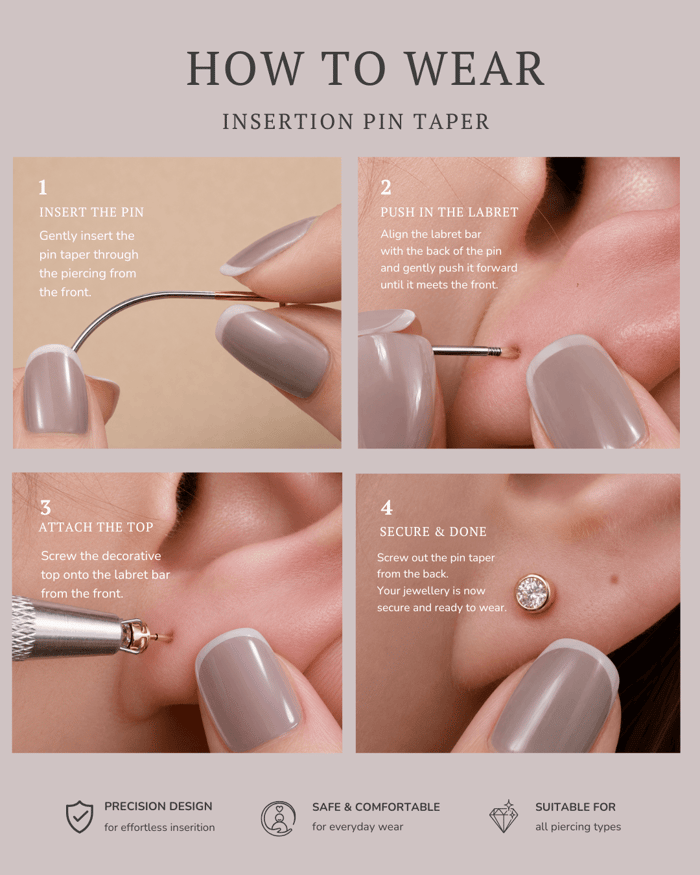
FlatBack Earring Insertion Tool Kit

$69.00
Change your flat back earrings with ease. This professional-grade tool kit is designed for effortless, precise insertions - so every jewellery change feels seamless. Precision taper tools for smooth, guided insertion Ball grabber for secure, effortless fastening Designed for flat… read more
Lumina Teardrop Diamond Flatback Earring

$479.00
A drop of light, set in gold. The lumina teardrop diamond flatback earring features a delicate teardrop silhouette illuminated by a fine diamond. Designed with a smooth flatback for secure, all day comfort, it is perfect for cartilage, second piercings,… read more
What Is Normal While an Ear Piercing Heals?
Some temporary changes are common during the initial healing stage.
You may experience:
- Mild tenderness
- Slight swelling
- Localised redness
- Occasional itching
- A small amount of clear or pale fluid
- Light crust around the jewellery
These symptoms should gradually become less noticeable rather than more intense.
Cartilage piercings may become irritated after being slept on, caught on clothing or pressed beneath headphones. Identifying and removing the source of pressure can often help calm the area.
Signs an Ear Piercing May Be Infected
Good ear piercing aftercare reduces avoidable irritation, but it is still important to recognise symptoms that may require medical attention.
Possible warning signs include:
- Increasing pain or swelling
- Redness spreading beyond the piercing
- Skin that feels unusually hot
- Thick yellow or green discharge
- An unpleasant smell
- Fever, chills or feeling unwell
- Jewellery becoming embedded
- Significant cartilage swelling
Seek medical advice promptly if symptoms are worsening, particularly when cartilage is involved.
Do not automatically remove the jewellery before speaking with a healthcare professional. Removing it may allow the outside of the piercing to close while an infection remains beneath the skin.
Irritation or Infection: What Is the Difference?
An irritated piercing may feel tender or look slightly red, but it will often improve once the source of pressure or friction is removed.
Common causes of irritation include:
- Sleeping on the piercing
- Jewellery that is too tight or too long
- Catching the earring on hair or clothing
- Over-cleaning
- Using harsh products
- Wearing tight headphones
- Changing jewellery too early
An infection is more likely to involve increasing heat, spreading redness, worsening pain, thick discharge or feeling physically unwell.
When uncertain, contact your piercer or healthcare provider rather than experimenting with home remedies.
Choosing Jewellery After Your Piercing Has Healed
Your initial jewellery should be selected and fitted by a reputable professional piercer. The material, finish, shape and post length can all affect comfort.
Once the piercing is fully healed, quality solid-gold jewellery offers a timeless option for everyday styling. Explore VUOI’s 14K solid gold earrings or discover our wider earring collection.
Avoid low-quality jewellery made from unknown metals, especially if you have sensitive ears.
For more information about caring for your pieces after your piercing has healed, visit the VUOI Jewellery Care Guide.
Why Choose Flat Back Earrings?
Flat back earrings feature a smooth disc that sits behind the ear instead of a traditional butterfly closure.
After the piercing has fully healed and the jewellery has been professionally fitted, this style can offer:
- A smooth finish behind the ear
- Less catching on hair and clothing
- Comfortable everyday wear
- A clean look for curated ear stacks
- Secure, low-fuss styling
VUOI’s Flatback Edit includes refined 14K solid gold designs created for all-day ease and intentional ear styling.
Comfort does not mean you should change a healing piercing early. Always wait until your piercer confirms that the placement is ready.
Serena Flatback Earring

$239.00
Quietly refined and designed for comfort. The serena flatback earring sits close to the ear with a smooth, secure backing for effortless, all day wear. Minimal yet luminous, it adds a subtle glow to curated ears, second piercings, or everyday stacks.… read more
Heart Bonbons Flatback Earring

$269.00
Sweet like candy, cute like a crush, this flatback heart adds a pop of playful love to your stack. Comfy, charming, and made to stay close. … read more
FAQs
How often should I clean a new ear piercing?
Follow the instructions provided by your professional piercer. Sterile saline is commonly used once or twice daily, but excessive cleaning can cause dryness and irritation.
Should I rotate my earrings while they heal?
No. Rotating the jewellery can disturb developing tissue and transfer bacteria into the piercing channel.
Can I shower with a new ear piercing?
Yes. Allow clean shower water to run gently over the area. Avoid scrubbing it and dry it carefully afterwards.
Can I sleep on a new piercing?
Avoid sleeping directly on it. Pressure can irritate the area and potentially affect the angle of a cartilage piercing.
When can I change my piercing jewellery?
Wait until the piercing is free from tenderness, swelling, redness and ongoing discharge. A professional piercer should ideally confirm that it has healed before your first jewellery change.