Table of Contents
- Why Do My Earrings Hurt When I Sleep?
- Traditional Earring Backs Can Create Pressure
- Your Earring Post May Be Too Long
- Your Earrings May Be Too Tight
- Heavy Earrings Can Pull on the Piercing
- The Piercing May Still Be Healing
- Your Piercing May Be Irritated
- Could You Be Sensitive to the Metal?
- What Are Flatback Earrings?
- Why Are Flatback Earrings More Comfortable for Sleeping?
- Can You Sleep in Flatback Earrings?
- Flatback Earrings vs Butterfly Backs
- How to Make Sleeping With Earrings More Comfortable
- When Should You Stop Sleeping in Your Earrings?
- When Is Earring Pain a Sign of a Bigger Problem?
- A Smoother Way to End the Day
- FAQs
If you have ever woken up with a sore earlobe and wondered, “Why do my earrings hurt when I sleep?”, the answer may be sitting right behind your ear.
Traditional earring posts and butterfly backs can press into the skin when your head rests against a pillow. The discomfort may feel like a small pinch at first, but repeated pressure, friction and movement can leave the area tender by morning.
For healed piercings, changing the shape and fit of your jewellery may make a noticeable difference. Flatback earrings replace the protruding post and butterfly closure with a smooth, low-profile backing designed to sit more neatly against the ear.
Here is why earrings may feel uncomfortable at night, what your jewellery fit has to do with it and when flatback earrings may be the more comfortable choice.
Why Do My Earrings Hurt When I Sleep?
If you’re wondering, “Why do my earrings hurt when I sleep?” side sleeping may be the reason. The weight of your head presses your ear against the pillow, turning any jewellery between them into a pressure point.
The discomfort is not always caused by the piercing itself. It may come from the earring post, backing, jewellery size, metal, or the angle at which the piece sits.
Common reasons earrings hurt during sleep include:
A long post pressing into the skin
A butterfly back digging into the area behind the ear
Jewellery that is too tight
Heavy earrings pulling on the lobe
A piercing that has not fully healed
Friction from movement against the pillow
Jewellery catching on hair or bedding
Sensitivity to the earring material
Irritation caused by sleeping on the same side repeatedly
Understanding where the discomfort is coming from can help you decide whether you need a different earring, a professional jewellery fitting or additional care for the piercing.
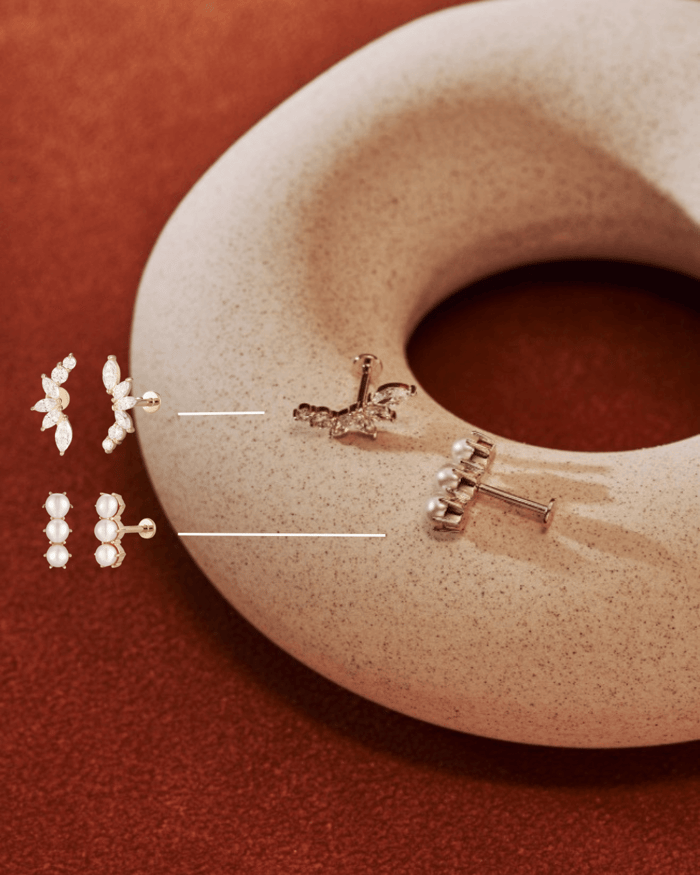 Image Captio
Perla Linea Flatback Earring

$369.00
The perla linea flatback earring blends classic softness with contemporary form. A line of delicate pearls set in a sleek silhouette brings calm elegance and quiet confidence. … read more
Soléna Diamond Flatback Earring

$499.00
The soléna diamond flatback earring is inspired by soft sunlight and quiet strength. Set with a diamond in a rising crescent of light, it echoes the gentle form of feathers and petals. … read more
Traditional Earring Backs Can Create Pressure
Butterfly backs are one of the most common earring closures. They are easy to use, but their shape is not always ideal for sleeping.
A traditional stud usually has a post that extends behind the earlobe. The butterfly backing slides onto that post, often leaving a small section protruding behind it.
When you lie on your side, that exposed post may press into the skin behind your ear. The edges of the butterfly closure can also create concentrated pressure against the ear or neck.
Even when the earring feels completely comfortable during the day, the angle changes once your ear is pressed into a pillow for several hours.
This can lead to:
Tenderness behind the earlobe
Small pressure marks
Redness
A pinching sensation
General soreness when you wake up
The problem may be more noticeable if you naturally sleep on one side or wear several earrings in one ear.
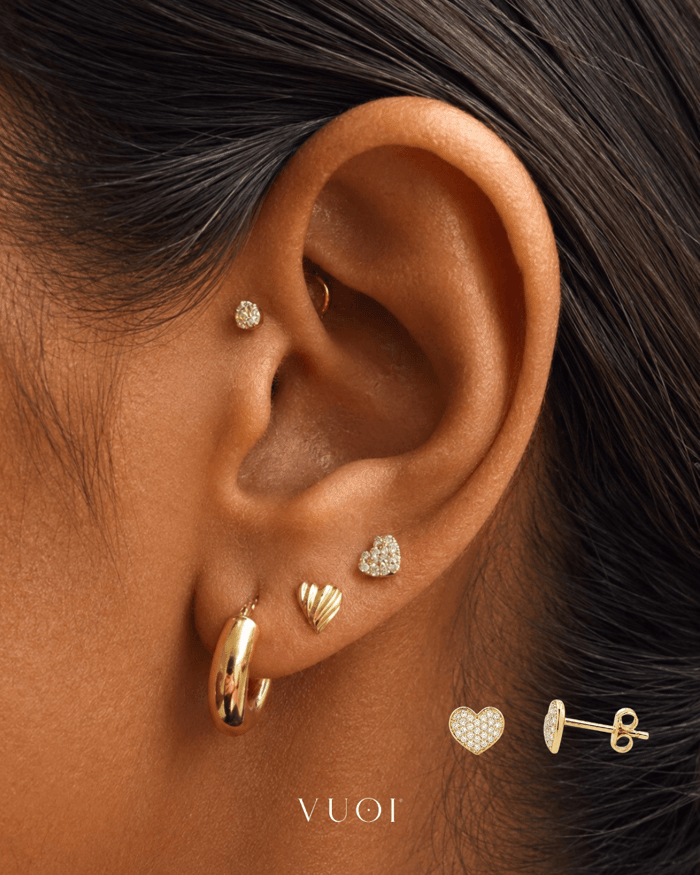
Éclat Heart Stud Earring

$499.00
Radiance in the shape of love. The éclat heart stud earring pairs a timeless heart silhouette with refined brilliance, delicate yet luminous. Designed to catch the light with effortless elegance, it’s perfect for everyday romance or a subtle touch in your… read more
Your Earring Post May Be Too Long
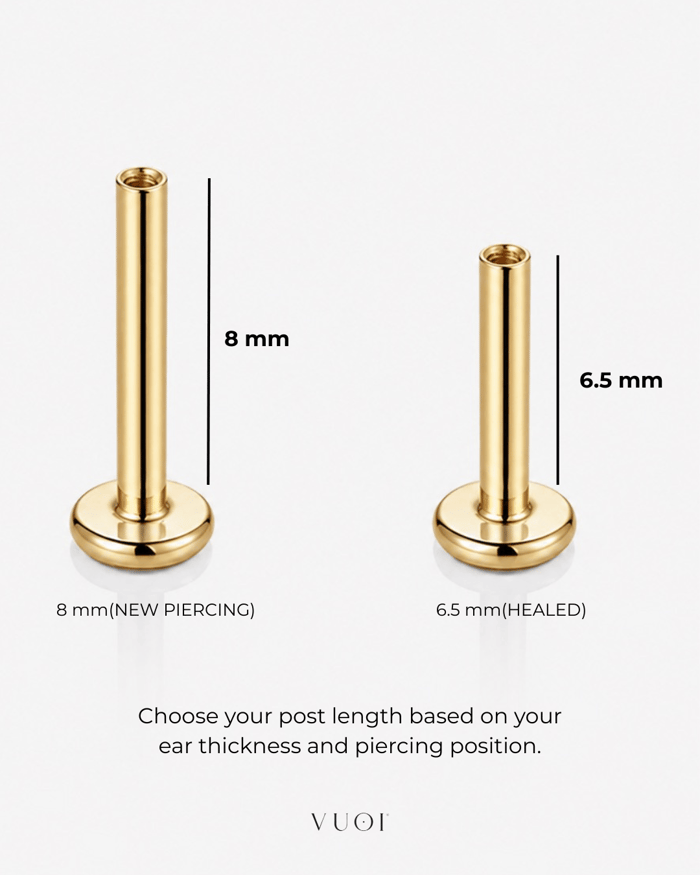
Earring posts need enough space to pass through the piercing and accommodate the closure. However, a post that is significantly longer than your anatomy requires may move excessively or press into the skin.
Longer posts can also catch more easily on:
Pillowcases
Towels
Clothing
Hair
Headphones
Phone screens
This repeated movement may irritate the piercing channel, even when the piercing is fully healed.
Flatback earrings are available in different post lengths, allowing a professional piercer to select a fit that suits the thickness of your ear and the position of the piercing.
The ideal fit should feel secure without squeezing the tissue.
Your Earrings May Be Too Tight
A tight earring can create constant pressure before your head even touches the pillow.
Butterfly backs are sometimes pushed too closely against the lobe in an attempt to secure the earring. This leaves little space for natural movement and may trap moisture or buildup behind the ear.
Signs that an earring may be too tight include:
The backing leaving a deep mark
The front of the stud sinking into the skin
Redness around the piercing
Throbbing or pressure
Difficulty removing the backing
Tenderness when the earring is touched
Jewellery should not feel as though it is clamping the earlobe.
If the earring appears embedded or the skin is growing over part of it, do not force it out yourself. Seek advice from a qualified piercer or healthcare professional.
Heavy Earrings Can Pull on the Piercing
Weight is another common reason earrings become uncomfortable at night.
Large hoops, statement earrings and heavy drops can pull on the piercing when you move. They may also twist against the pillow, placing pressure on the lobe from different angles.
Statement pieces are generally better removed before bed.
For overnight wear in fully healed piercings, lightweight studs or properly fitted flatbacks are usually more practical than heavy or highly decorative earrings.
A comfortable sleep earring should feel almost unnoticeable rather than becoming the centre of attention.
The Piercing May Still Be Healing
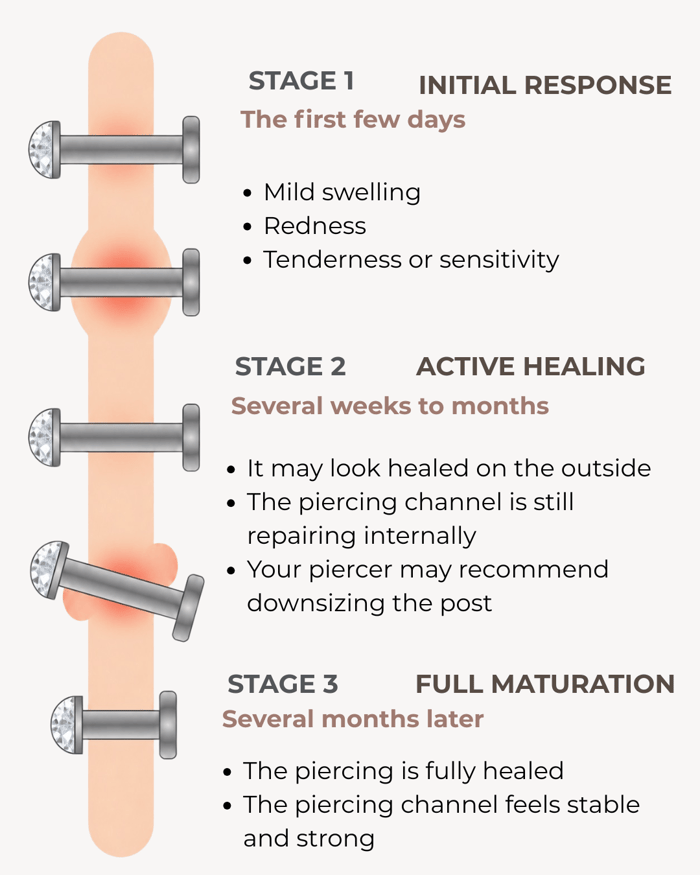
New piercings often feel tender because the tissue is still recovering. Sleeping directly on a healing piercing can increase irritation and, in cartilage placements, may even contribute to changes in the piercing angle.
The Association of Professional Piercers recommends avoiding direct pressure on healing cartilage piercings. A travel pillow can be placed over a regular pillow so the ear rests inside the opening rather than against the surface.
Healing time varies according to the placement and the individual. Earlobe piercings may initially heal within several weeks, while cartilage piercings can take many months and sometimes up to a year.
Do not replace the initial jewellery simply because it feels uncomfortable at night. During healing, jewellery changes should be assessed and performed by a qualified piercer when necessary.
For more guidance, read VUOI’s ear piercing aftercare dos and don’ts.
Your Piercing May Be Irritated
A piercing can become irritated even after it appears to have healed.
Possible causes include:
Sleeping on the same ear every night
Wearing jewellery with an unsuitable fit
Changing earrings frequently
Using harsh skincare or hair products near the piercing
Catching the earring on clothing
Wearing tight headphones
Allowing moisture to remain behind the ear
Touching the piercing unnecessarily
Mild irritation may improve once the pressure or friction is removed. However, increasing pain should not be ignored.
If the piercing becomes increasingly swollen, hot, red or begins producing thick discharge, seek medical advice. These may be signs of infection rather than simple pressure irritation.
Could You Be Sensitive to the Metal?
Sometimes the discomfort is related to the jewellery material rather than the shape of the backing.
Metal sensitivity may cause:
Itching
Redness
Dry or flaky skin
A burning sensation
Swelling
Persistent tenderness
Plated earrings can become problematic when the outer layer wears away and exposes the base metal underneath.
Choosing high-quality jewellery made from an appropriate material may help reduce irritation. Depending on your sensitivity and the advice of your piercer, options may include implant-grade titanium, niobium or suitably alloyed solid gold.
VUOI’s LAYBACK earrings are crafted in 14K solid gold for a polished finish designed around everyday wear. Individual sensitivities can still vary, so consult a professional if you regularly react to earrings.
What Are Flatback Earrings?
If you’re wondering, “Why do my earrings hurt when I sleep?” a traditional butterfly closure or protruding post may be contributing to the discomfort.
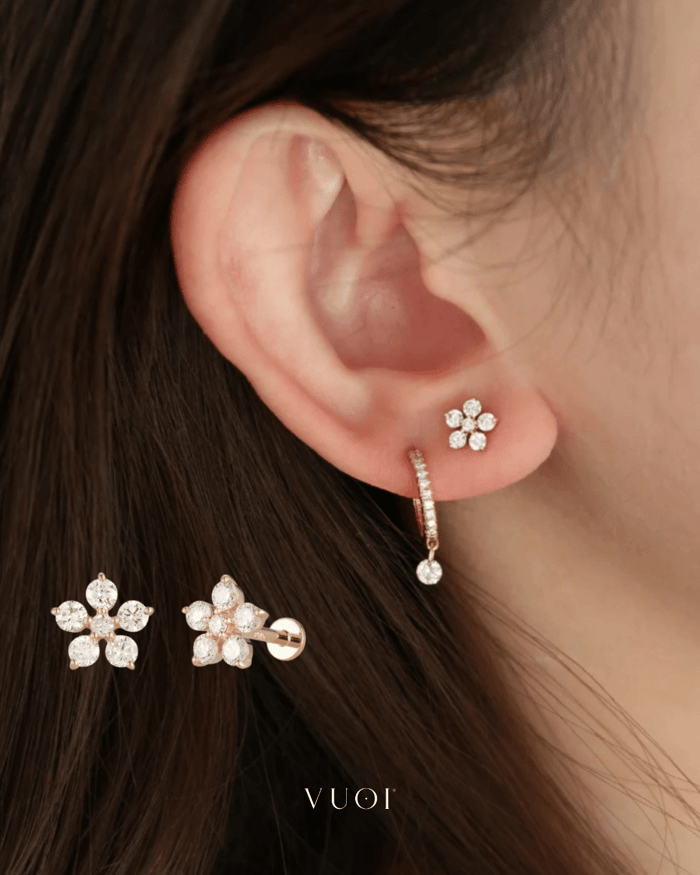
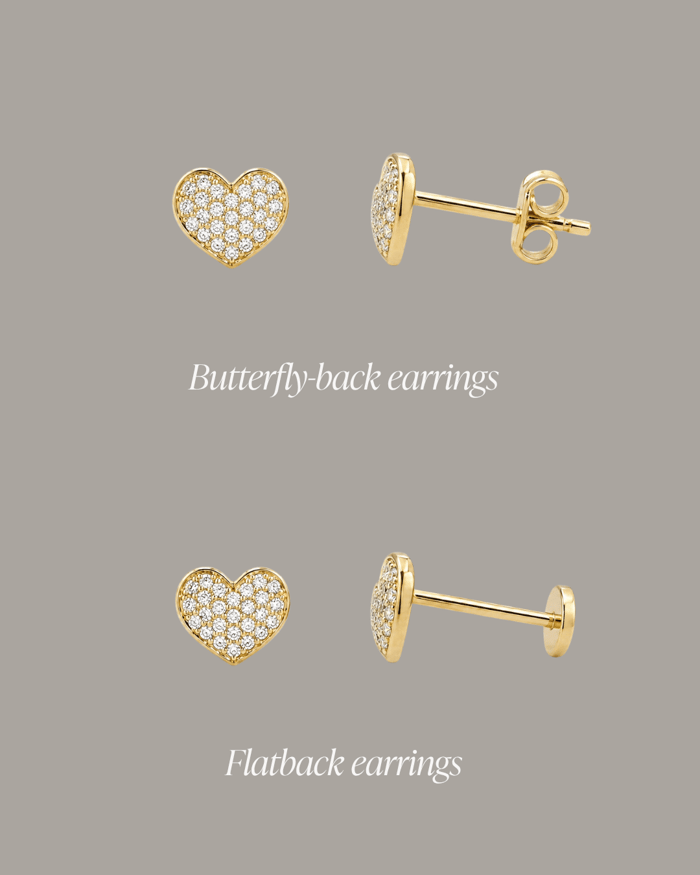
Flatback earrings use a smooth, disc-shaped backing that sits flush against the rear of the ear. The decorative front connects from the opposite side using an internally threaded or threadless mechanism. When fitted correctly, no sharp section extends behind the closure, creating a cleaner, lower-profile finish.
Flatback earrings are commonly worn in:
Lobe piercings
Helix piercings
Tragus piercings
Conch piercings
Forward helix piercings
Curated ear stacks
The correct gauge and post length depend on the piercing and your individual anatomy.
Why Are Flatback Earrings More Comfortable for Sleeping?
If you’re wondering, “Why do my earrings hurt when I sleep?” the shape of the earring back may be the reason.
A smooth flat disc distributes pressure more evenly than a narrow post or butterfly closure when your ear rests against a pillow. With less protruding hardware, it is also less likely to poke your skin or catch on bedding.
For fully healed piercings, properly fitted flatback earrings may offer:
A smoother surface behind the ear
Less catching on hair
Reduced pressure from a protruding post
A secure, low-profile fit
Easier styling across multiple piercings
Greater comfort when using a phone or headphones
Flatbacks are not guaranteed to make every piercing comfortable, especially when the post length or gauge is incorrect. A piece that is too tight can still create pressure, while one that is too long may move and catch.
Fit matters just as much as the backing style.
Explore VUOI’s LAYBACK flatback earring collection for low-fuss pieces made for considered comfort and everyday shine.
Can You Sleep in Flatback Earrings?
Many people choose flatback earrings for everyday wear because the smooth backing is less intrusive than a traditional butterfly closure.
However, whether you should sleep in them depends on several factors:
The piercing must be appropriately healed.
The jewellery should be the correct size.
The material should suit your skin.
The front should not be excessively large or heavy.
The post should not squeeze the tissue.
The earring should be clean and securely fitted.
Even with a flatback, you may still wonder, “Why do my earrings hurt when I sleep?” Repeatedly sleeping directly on a healing or irritated piercing can worsen discomfort.
A comfortable earring cannot replace proper aftercare or prevent the effects of continuous pressure.
Flatback Earrings vs Butterfly Backs
Both styles can work well during the day, but their structures feel different when pressure is applied.
Butterfly-back earrings
Use a removable clutch-style backing
Often leave part of the post exposed
Can collect buildup within the backing
May press into the skin during side sleeping
Are widely used for standard fashion earrings
Flatback earrings
Use a smooth disc behind the ear
Do not have a sharp post extending beyond the backing when properly fitted
Create a lower-profile finish
May catch less on hair and bedding
Are suitable for many lobe and cartilage placements when correctly sized
The better option depends on your piercing, anatomy and lifestyle.
Serena Flatback Earring

$239.00
Quietly refined and designed for comfort. The serena flatback earring sits close to the ear with a smooth, secure backing for effortless, all day wear. Minimal yet luminous, it adds a subtle glow to curated ears, second piercings, or everyday stacks.… read more
Heart Bonbons Flatback Earring

$269.00
Sweet like candy, cute like a crush, this flatback heart adds a pop of playful love to your stack. Comfy, charming, and made to stay close. … read more
How to Make Sleeping With Earrings More Comfortable
Changing the jewellery may help, but your sleep habits also matter.
Choose a smooth, lightweight earring
Avoid heavy drops, oversized hoops and sharp details during sleep. Choose a small stud or flatback that does not pull on the piercing.
Check the fit
The post should allow the earring to sit securely without pinching. Ask a professional piercer to check the gauge and post length if you are unsure.
Avoid sleeping on a healing piercing
Sleep on the opposite side or use a travel pillow so your ear rests inside the central opening.
Keep your pillowcase clean
Regularly changing your pillowcase helps reduce the transfer of oils, hair products and bacteria around the ear.
Keep hair away from the jewellery
Tie long hair loosely away from the ear to reduce tangling and pulling.
Remove unsuitable earrings before bed
Large hoops, chains and statement earrings should generally be removed before sleeping, even when the piercings are fully healed.
Do not twist irritated jewellery
Unnecessary movement may further disturb the piercing. Wash your hands before touching the area and follow appropriate aftercare guidance.
When Should You Stop Sleeping in Your Earrings?
Remove fashion earrings before bed when they are:
Heavy
Long
Sharp
Loose
Easy to catch
Pressing painfully into the skin
Do not remove jewellery from a new or potentially infected piercing without professional advice. A healing piercing may begin to close when jewellery is removed, while removing jewellery during a suspected infection may complicate the situation.
Seek professional guidance when discomfort continues after changing your sleep position or jewellery style.
When Is Earring Pain a Sign of a Bigger Problem?
Occasional pressure discomfort is different from pain that becomes progressively worse.
Contact a professional piercer or healthcare provider if you notice:
Increasing redness or swelling
Significant warmth around the piercing
Thick yellow or green discharge
A strong or unpleasant smell
Severe or throbbing pain
Jewellery becoming embedded
Redness spreading away from the piercing
Fever, chills or feeling unwell
Piercing infections can require medical treatment, particularly when cartilage is involved.
This article offers general educational information and is not a substitute for personalised medical advice.
A Smoother Way to End the Day
Jewellery should move with your life—not become the reason you cannot get comfortable.
When traditional posts and butterfly backs press into the skin, a properly fitted flatback may provide a smoother alternative. Its low-profile design sits neatly behind the ear, making it a considered choice for everyday wear, curated stacks and quieter nights.
LAYBACK by VUOI is designed for comfort and styled for shine: 14K solid gold flatback earrings made to feel effortless from your first coffee to your final goodnight.
Discover the LAYBACK flatback earring collection and find the pieces that fit your ear, your style and your everyday rhythm.
FAQs
Why does the back of my earring hurt when I sleep?
The post or closure may be pressing into the skin behind your ear. Butterfly backs, long posts and overly tight jewellery can all create pressure when your ear rests against a pillow.
Why do healed piercings hurt after sleeping?
A healed piercing can still become irritated by pressure, friction, heavy earrings, poor jewellery fit or metal sensitivity. Persistent pain should be assessed by a piercer or healthcare professional.
Are flatback earrings better for side sleepers?
A correctly fitted flatback has a smooth, low-profile backing that may feel less intrusive than a protruding post or butterfly closure. You should still avoid sleeping directly on healing or irritated piercings.
Can I put flatback earrings in regular lobe piercings?
Many healed lobe piercings can accommodate flatback earrings, but the gauge and post length must be suitable. A professional piercer can check the existing piercing and fit the jewellery safely.
Should flatback earrings feel tight?
They should feel secure but should not pinch, sink into the skin or leave deep pressure marks. If a flatback feels tight, have the post length checked.