Table of Contents
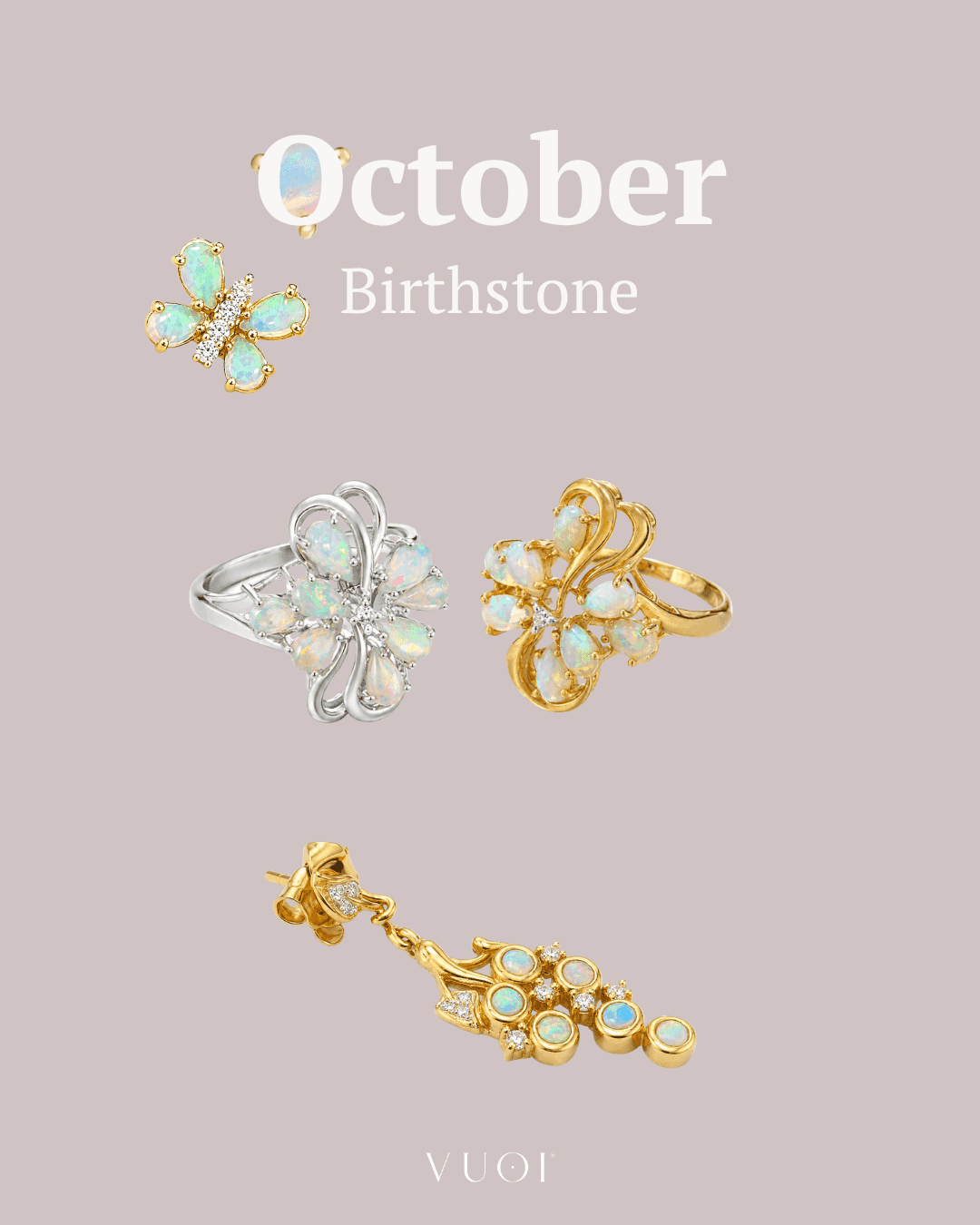
Opal, October’s birthstone, is a gemstone that seems to hold light within it. As the stone moves, flashes of blue, green, orange, pink and red may appear, an optical phenomenon known as play-of-colour.
Traditionally associated with creativity, hope and emotional expression, opal feels deeply personal. No two stones display exactly the same pattern, making each piece of opal jewellery a small world of its own.
From mysterious Australian black opal to glowing Mexican fire opal, this guide explores the main types of opal, how to distinguish natural opal from synthetic or imitation material, and how to care for your October birthstone jewellery.
Why Does Opal Display So Many Colours?
Opal, is formed from hydrated silica. Inside precious opal, microscopic silica spheres are arranged in a structure that interacts with light.
As light travels through these tiny spaces, it separates into spectral colours. This creates the shifting rainbow effect known as play-of-colour.
The colours you see depend on several factors, including:
The size and arrangement of the silica spheres
The angle of the stone
The direction of the light
The transparency and body colour of the opal
The thickness and orientation of its colour-producing layers
This is why an opal can appear calm and blue from one direction, then suddenly reveal orange, green or red as it moves.
The Main Types of Opal
Opal names may describe a gemstone’s body colour, transparency, formation or geographic origin. Because these descriptions refer to different characteristics, some categories can overlap.
For example, an opal may be both crystal opal and black opal if it has sufficient transparency and a dark body tone.
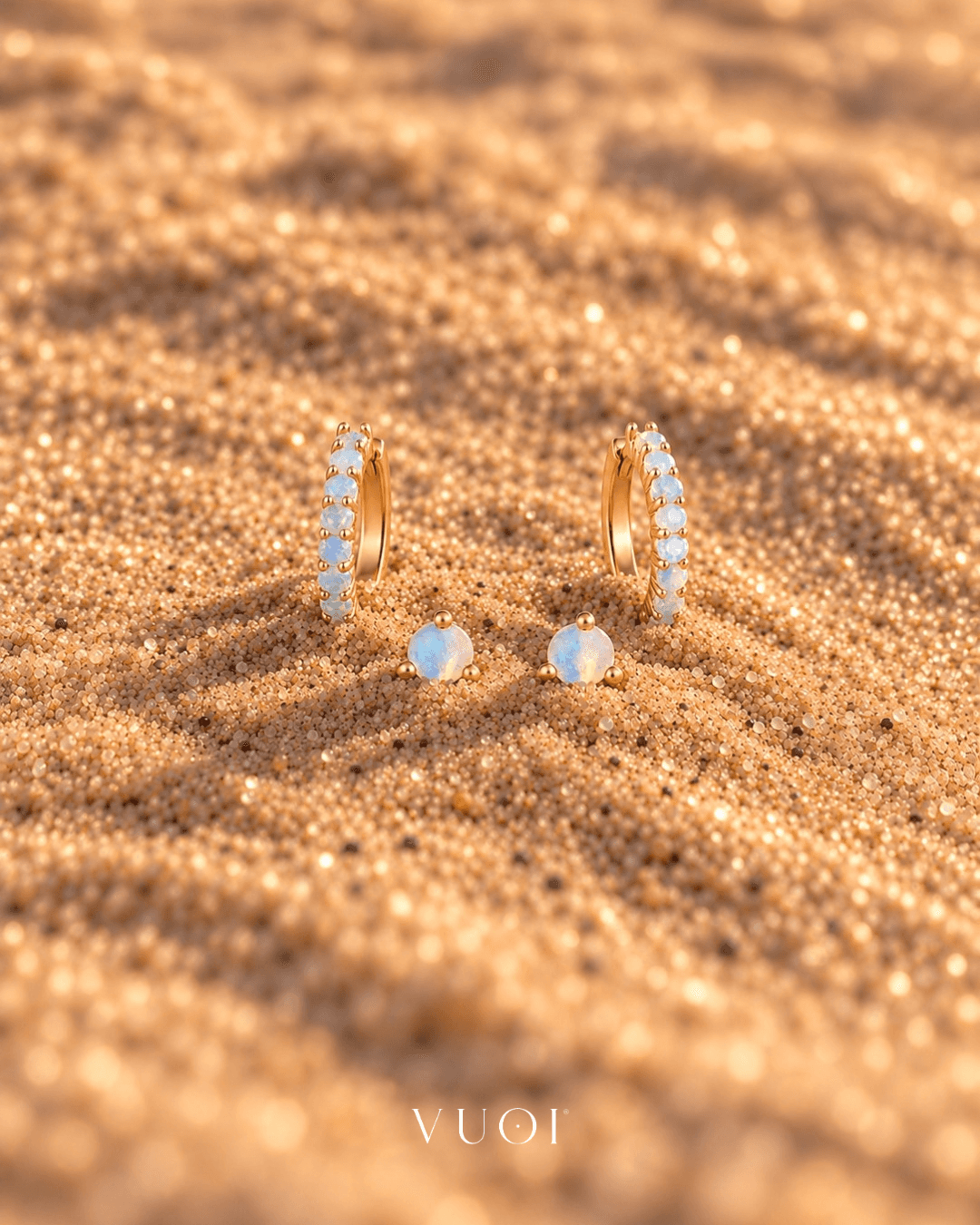
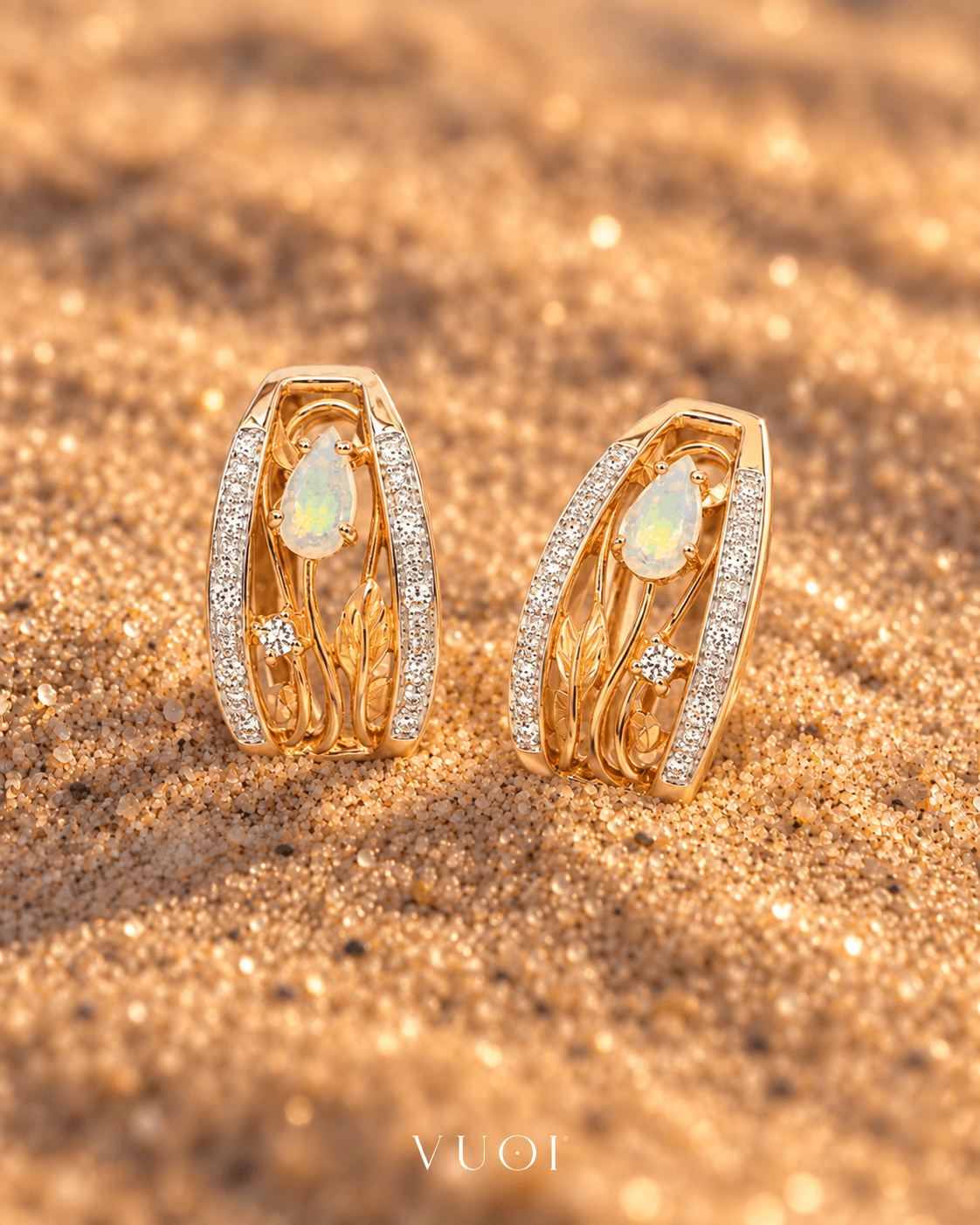
October Birthstone Opal Huggie Earring
$459.00
The october birthstone opal huggie earring carries the energy of creativity and inner light. Opal is known for encouraging self expression and emotional flow.… read more

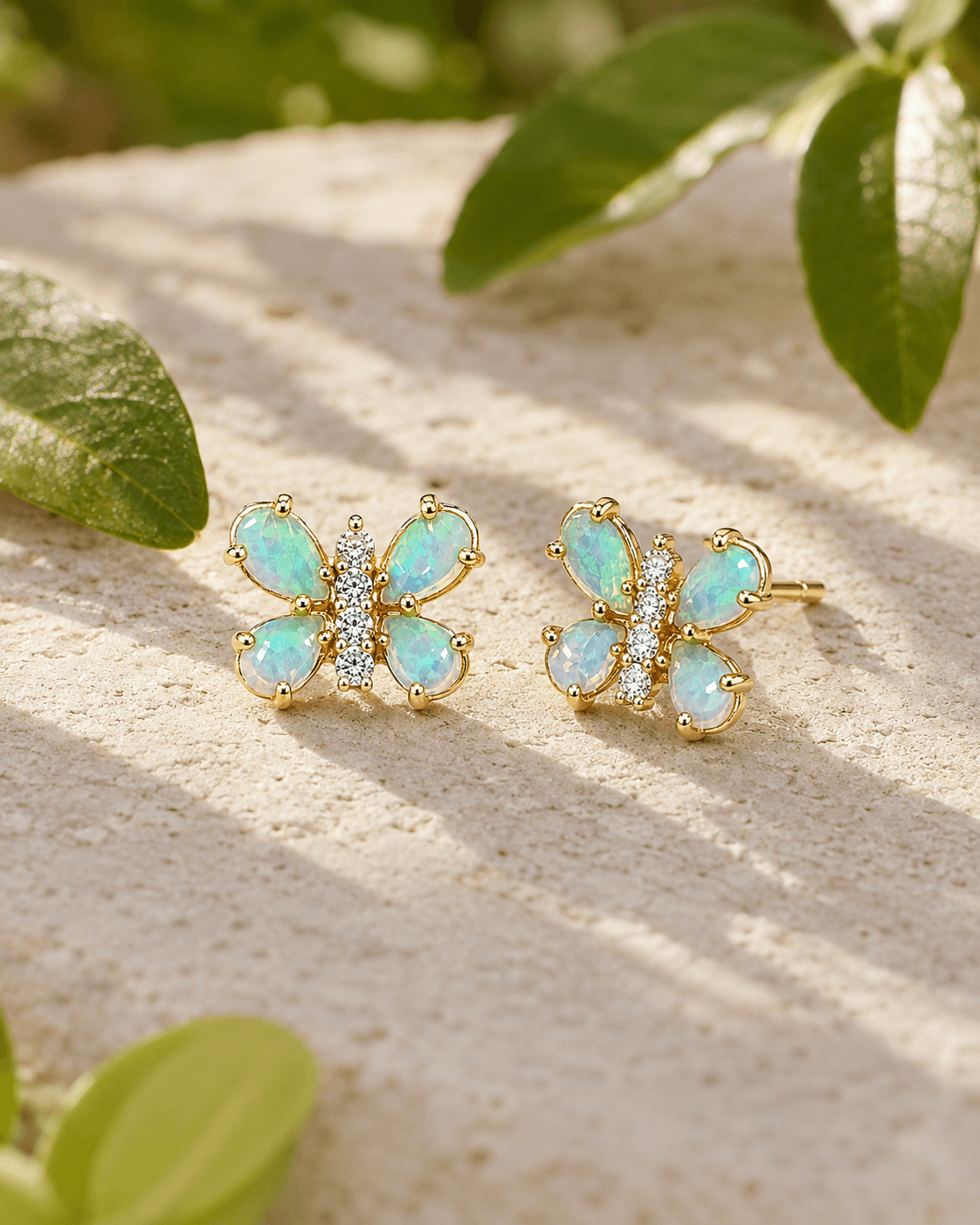
October Birthstone Opal Stud Earring
$199.00
The october birthstone opal stud earring symbolises creativity, intuition, and inner light. Featuring opal in a classic stud silhouette, it reflects fluid energy and soft everyday glow. … read more

Black Opal
Black opal has a dark grey to black body tone beneath its play-of-colour.
Its dark background creates striking contrast, allowing the spectral colours to appear especially vivid. Fine black opal displaying strong red, orange and green flashes is among the rarest and most highly valued opal material.
Lightning Ridge in New South Wales is the world’s most celebrated source of black opal.
Dark Opal
Dark opal has a grey or deep body tone but is not dark enough to be classified as black opal.
It offers a similarly mysterious appearance and can create beautiful contrast while often sitting at a more accessible price point than fine black opal.
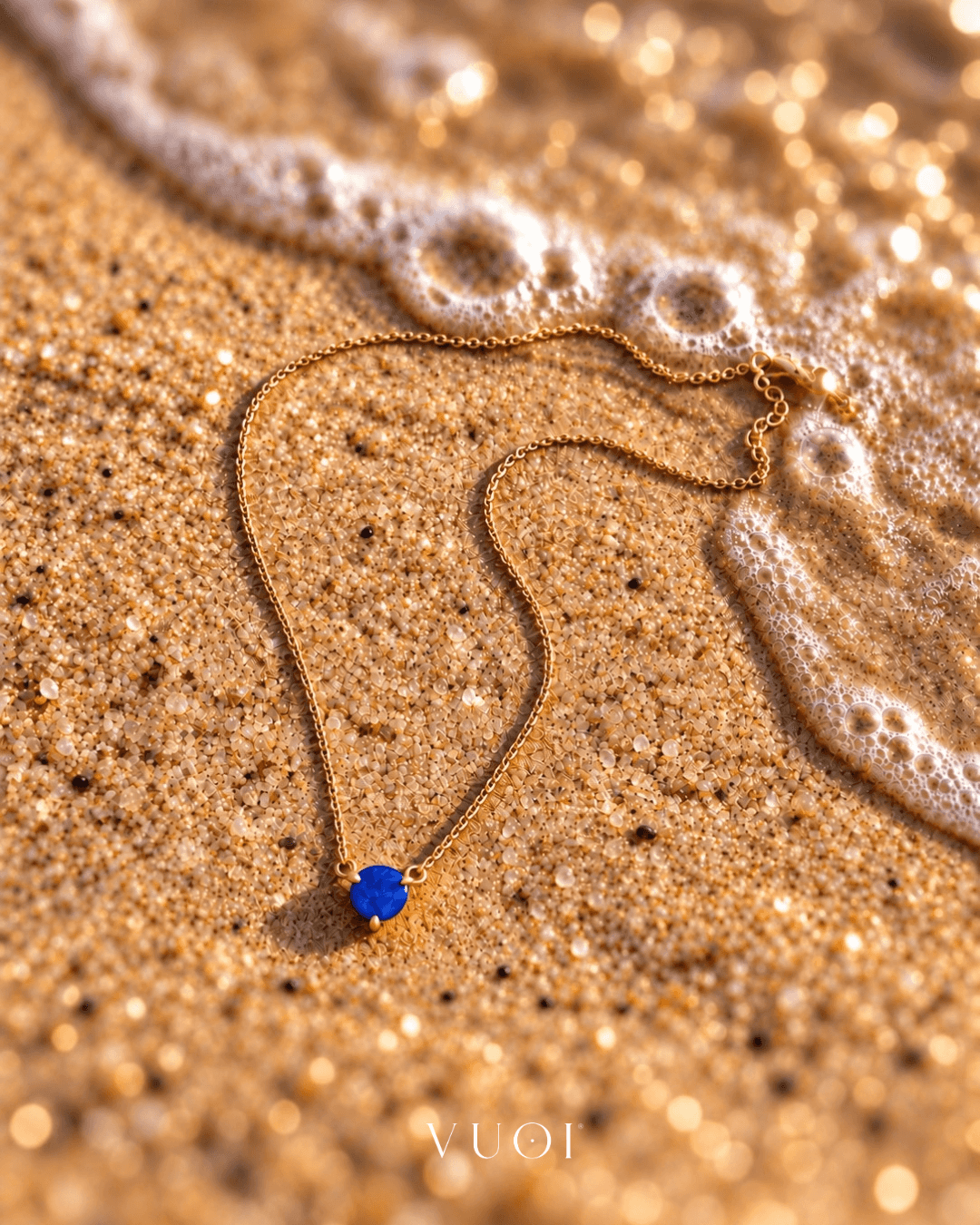
October Birthstone Opal Solitaire Necklace
$619.00
Iridescent and luminous, the October birthstone opal solitaire necklace captures the spellbinding beauty of opal. Known as a stone of creativity and transformation, its shifting colours feel like light in motion. Delicate yet unforgettable—a modern talisman for intuition and radiant… read more

White or Light Opal
White opal has a white, cream or pale body tone with visible play-of-colour.
Its appearance is softer and more luminous than black opal. The colours can seem to float through a delicate, cloud-like background, creating an ethereal effect.
Coober Pedy in South Australia is particularly renowned for white and light opal.
Crystal Opal
Crystal opal is transparent to semi-transparent, allowing light to travel through the body of the gemstone.
Its play-of-colour can appear suspended inside the stone rather than resting on its surface. Crystal opal may have a light, dark or almost colourless body tone.
Fine crystal opal can display remarkable depth and brightness, especially when viewed from different angles.
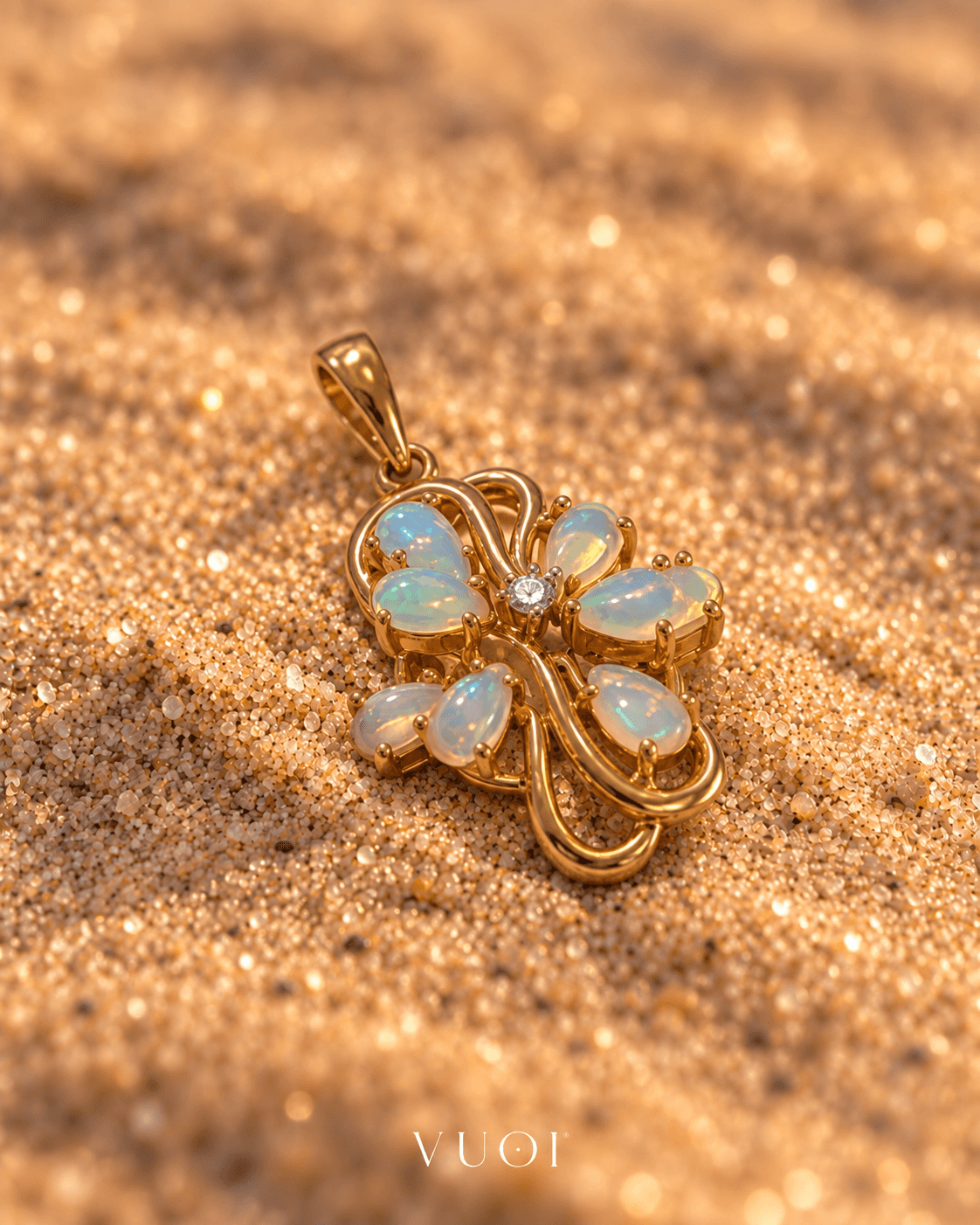
Water Opal
Water opal is transparent to translucent with a colourless or very pale body.
It may display soft play-of-colour, although some water opals show little or none. Its clear, liquid-like appearance gives it an especially serene and otherworldly quality.
Fire Opal
Fire opal is defined by its warm yellow, orange or red body colour, not necessarily by rainbow play-of-colour.
Some fire opals display spectral flashes, while others are valued entirely for their glowing body colour. Transparent examples may be faceted rather than shaped into traditional rounded cabochons.
Mexico is the classic source of fine fire opal.
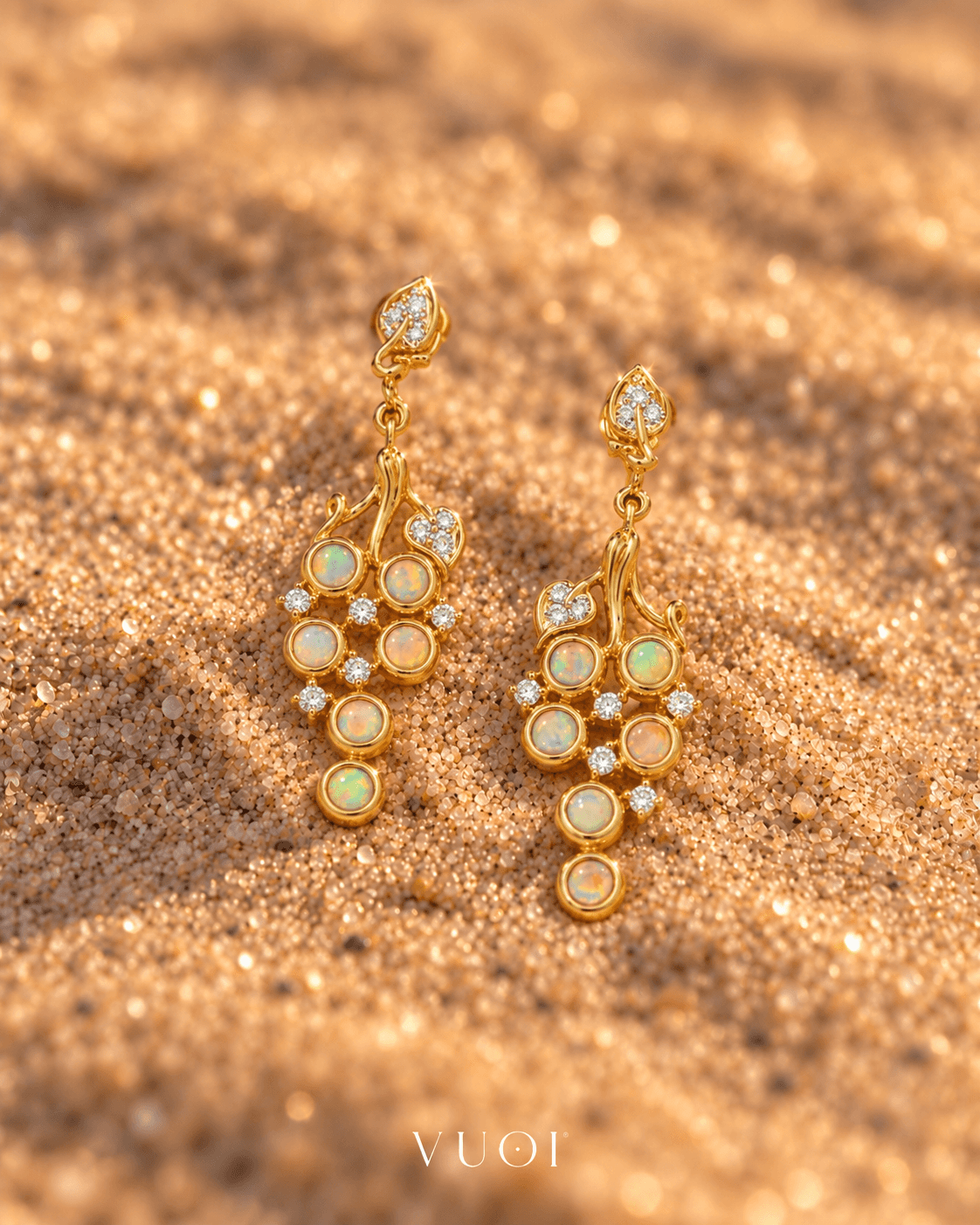
Boulder Opal
Boulder opal forms as thin veins or patches of precious opal within brown ironstone.
Because the opal layer can be extremely thin, the gemstone is cut with its natural ironstone host rock attached. This is not an artificial backing; it is part of the stone’s original geological formation.
The contrast between earthy ironstone and electric colour gives boulder opal its unmistakably organic character. Queensland is its most famous source.
Matrix Opal
Matrix opal forms when precious opal appears as small veins, flecks or patches throughout its host rock.
Instead of forming one continuous layer, the colour looks as though it has been woven through the surrounding material.
Some matrix opal is treated to darken the host rock and intensify its visible play-of-colour. Any treatment should be disclosed because it can influence the gemstone’s appearance, care requirements and value.
Hyalite
Hyalite is a transparent or colourless variety of common opal with a glass-like appearance.
Some hyalite can fluoresce vivid green under ultraviolet light due to trace elements within the material. It does not usually display the classic play-of-colour associated with precious opal.
Potch
“Potch” is an Australian mining term for common opal without play-of-colour.
It may appear white, grey, brown or black and can occur beside precious opal within the same natural formation. In some stones, potch becomes part of the opal’s pattern or provides a contrasting background for its colour.
Natural, Synthetic, Treated or Imitation Opal?
The word “fake” can be misleading in the opal world.
An assembled opal may contain genuine natural opal. Synthetic opal is laboratory-created but may reproduce aspects of opal’s internal structure. Imitation opal simply resembles the gemstone without sharing the same composition or formation.
Understanding the correct category is essential when comparing identity, durability and value.
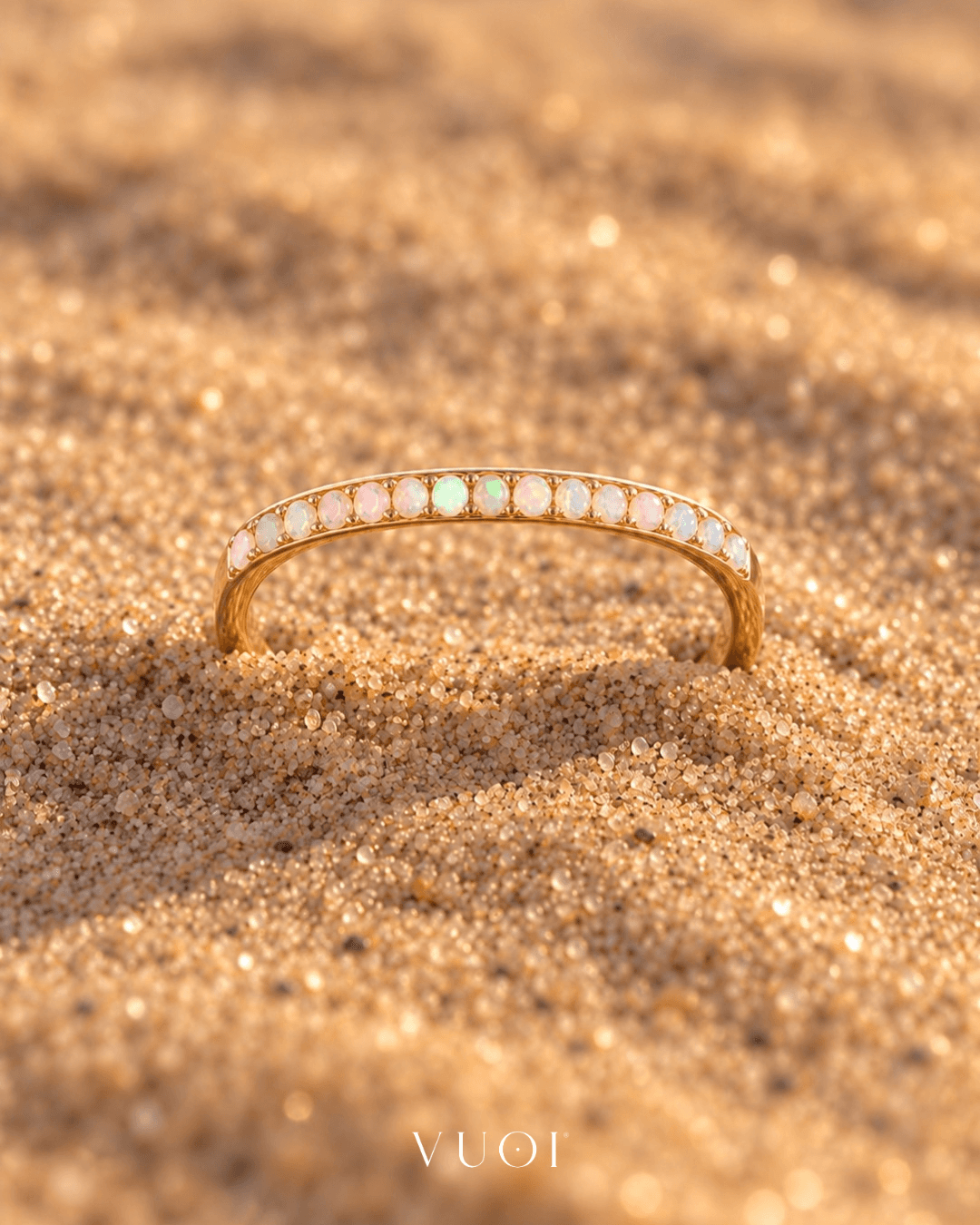
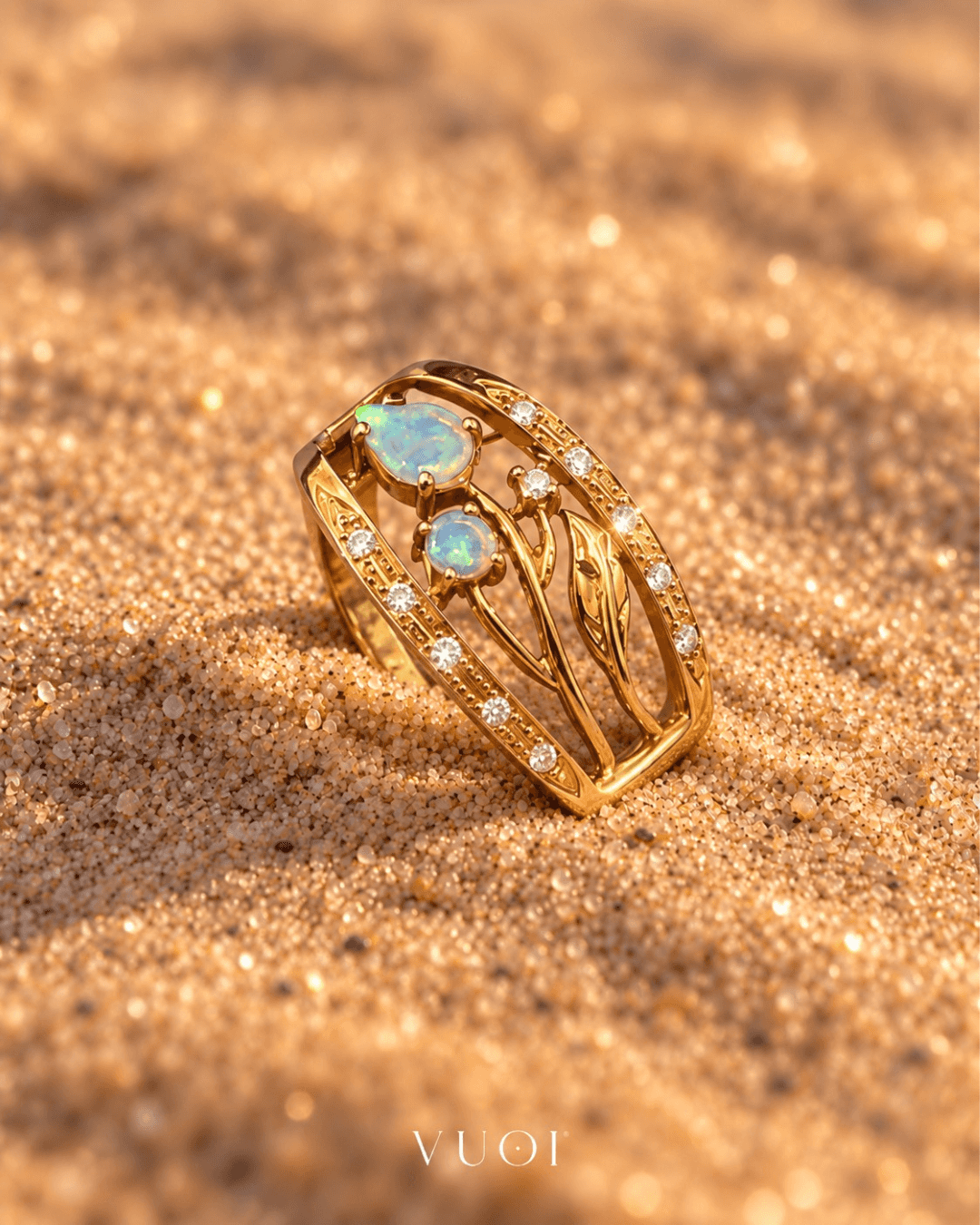
October Birthstone Opal Eternity Ring
$799.00
The october birthstone opal eternity ring symbolises creativity, intuition, and emotional depth. Set with opal in an endless band, it reflects inner light and fluid expression. Designed for everyday wear, effortless stacking, and meaningful gifting. Resizing is available and can be… read more

Solid Natural Opal
A solid opal is one continuous piece of naturally formed opal.
Boulder opal is also considered natural solid material, even though its ironstone host rock remains attached. This is because the opal and ironstone formed together in nature.
Opal Doublet
An opal doublet consists of a thin layer of natural precious opal attached to a dark backing.
The backing may be made from common opal, black glass, obsidian, plastic or another dark material. It supports the delicate opal layer and can make its colours appear stronger.
Doublets contain genuine opal, but they are not solid opals and should be identified and priced accordingly.
Opal Triplet
An opal triplet contains three layers:
A dark backing
A very thin layer of precious opal
A transparent glass or quartz cap
The clear top protects and visually magnifies the opal layer. Triplets can be colourful and attractive, but they generally hold significantly less value than comparable solid natural opals.
Synthetic Opal
Synthetic opal is produced in a laboratory with an engineered internal structure designed to create play-of-colour.
It is not simply coloured glass, but it has not formed naturally. Under magnification, some synthetic opals reveal overly regular patterns, column-like structures or a repeating texture sometimes described as “lizard skin.”
Modern synthetic opal can be extremely convincing, so professional gemmological testing may be necessary.
Treated Opal
Natural opal may be treated to alter its body colour, clarity or apparent brightness.
Treatments may include:
Dyeing
Smoke treatment
Sugar-and-acid darkening
Oil or resin filling
Surface coating
Artificial darkening of matrix material
A treated opal can still be visually beautiful, but the treatment should always be disclosed because it may affect the stone’s identity, durability, care and value.
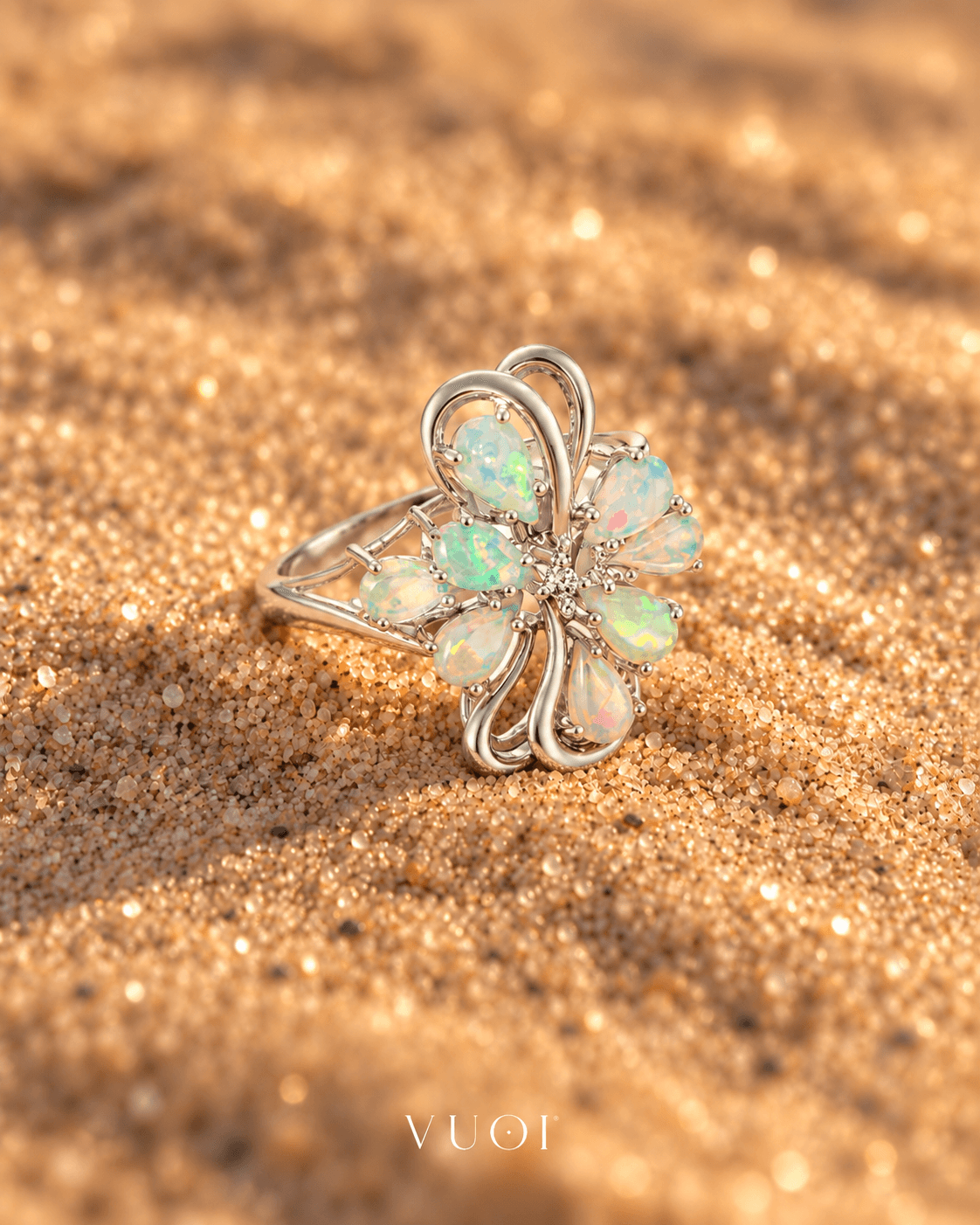
Corolle Opal Ring
$3,190.00
Eight crystal solid opal, each one shifting colour as the light moves - green, blue, gold, pink, all at once and never quite the same twice. The Corolle opens across the finger like a flower mid-bloom, with a single diamond… read more

Imitation Opal
Imitation opal may be made from glass, plastic, resin, foil or composite materials.
It is designed to resemble opal visually but does not share the same natural structure or composition.
How to Recognise Natural Opal
No home test can confirm every piece of opal jewellery with complete certainty. However, careful observation may help you notice signs that deserve closer examination.
Examine the Opal from Every Angle
Look at the gemstone face-up, from the side and from the back.
Doublets and triplets may reveal straight boundaries between their layers. A triplet can have an obviously glassy dome, while a doublet may show a smooth, uniformly dark backing.
Rotate the Stone Slowly
Natural play-of-colour generally changes with the viewing angle and appears to have depth within the gemstone.
Be cautious if the colour appears:
Printed onto the surface
Flat or foil-like
Perfectly repeated
Unnaturally uniform
Identical from every direction
Appearance alone, however, is not definitive proof.
Observe the Pattern
Natural opal patterns tend to feel irregular and organic.
Some synthetic opals display highly organised, repeating colour patches. They may also reveal vertical column-like structures when viewed from the side.
Look for Bubbles
Rounded gas bubbles may indicate a glass imitation. However, the absence of bubbles does not prove that an opal is natural.
Inspect the Back
Natural boulder opal usually has an irregular brown ironstone back, with an organic transition between the rock and the opal.
A doublet or triplet may instead have a smooth, uniformly black backing that looks manufactured.
Notice Unusual Colour Concentration
Dye can collect inside fractures, cavities or porous areas.
An unusually intense and even purple, blue or black body colour may justify further examination, particularly in highly absorbent hydrophane opal.
Check for Crazing
Fine cracks do not necessarily mean an opal is synthetic or imitation. Natural opal can develop a network of small cracks known as crazing.
Crazing can affect a gemstone’s durability and value, so it should always be considered before purchasing.
Ask for Written Disclosure
A reputable jeweller or gemstone seller should clearly state whether the stone is:
Natural solid opal
Boulder or matrix opal
An opal doublet or triplet
Synthetic opal
Treated opal
Imitation material
For a significant purchase, consider requesting a report from an independent gemmological laboratory.
Never use scratch tests, hot needles, household chemicals or prolonged water tests. These methods can permanently damage the gemstone while still producing unreliable results.
Corolle Opal Ring
$3,190.00
Eight crystal solid opal, each one shifting colour as the light moves - green, blue, gold, pink, all at once and never quite the same twice. The Corolle opens across the finger like a flower mid-bloom, with a single diamond… read more
How to Choose an Opal
Unlike diamonds, opals are not judged through one universal grading system. Their beauty and value depend on a combination of characteristics.
When choosing an opal, consider:
Brightness
How vivid is the play-of-colour? Bright colour that remains visible in different lighting conditions is generally more desirable.
Colour
Red is often considered the rarest play-of-colour, followed by orange, yellow, green and blue. However, the most meaningful opal is often the one whose colours naturally draw you in.
Pattern
Opal may display pinfire, broad flash, rolling flash, floral, harlequin or other distinctive colour formations. Rare, clearly defined patterns can command higher values.
Body Tone
A darker body tone can create stronger contrast, while a pale or crystal body can offer a softer, dreamlike quality. Neither is universally “better”—the choice is deeply personal.
Transparency
Transparent and semi-transparent crystal opals may show exceptional depth. Opaque stones can provide stronger contrast and more defined colour patterns.
Origin and Formation
Origin can influence an opal’s appearance, rarity, hydrophane properties and market value. It should be considered alongside the gemstone’s individual beauty rather than used as the only measure of quality.
Condition
Look for chips, surface-reaching fractures, crazing or areas of weakness, particularly in opals intended for rings or frequent wear.
How to Care for Opal Jewellery
Opal deserves a gentle ritual.
Clean it with lukewarm water, mild soap and a soft cloth or very soft brush.
Avoid ultrasonic and steam cleaners.
Keep it away from bleach, harsh chemicals and abrasive products.
Apply perfume, hairspray and cosmetics before putting on your opal jewellery.
Avoid sudden or extreme changes in temperature and humidity.
Never soak doublets or triplets, as moisture may affect the adhesive between the layers.
Avoid immersing hydrophane Ethiopian opal in water, oils or coloured liquids.
Store opal separately in a soft pouch or lined jewellery box.
Remove opal rings before cleaning, gardening, exercising or completing hands-on work.
Have frequently worn settings inspected periodically by a professional jeweller.
If a hydrophane opal becomes wet and temporarily changes colour or transparency, allow it to dry naturally and slowly. Never attempt to speed up the process with direct heat.
The Meaning of October’s Birthstone
Opal has long been connected with creativity, imagination, hope and emotional freedom.
Its changing colours feel like a reflection of the person wearing it, multifaceted, expressive and never limited to a single version of themselves. For October birthdays, opal is a symbolic reminder to trust your inner light and allow every part of you to be seen.
It is also a meaningful choice for anniversaries, personal milestones and moments of transformation. And sometimes, the right opal is simply the one you cannot stop looking at.
Find an Opal That Feels Like You
Every opal carries its own landscape of colour. Some are soft and celestial; others flash with fire. Some reveal their beauty immediately, while others wait for movement and light.
Explore VUOI Opal Jewellery and discover an October birthstone created to celebrate individuality, intuition and the joy of saying yes to yourself.
FAQs
Is opal the birthstone for October?
Yes. Opal is one of October’s traditional birthstones and is associated with creativity, hope, emotional expression and individuality.
Why does opal change colour?
Precious opal contains microscopic silica spheres that interact with light. As the gemstone moves, light separates into different spectral colours, creating the shifting effect known as play-of-colour.
What is the rarest type of opal?
Fine black opal is considered one of the rarest and most valuable types, particularly when it displays bright red, orange and green play-of-colour. Lightning Ridge in New South Wales is especially famous for black opal.
How can I tell if an opal is natural?
Examine the opal from the front, side and back. Natural opal usually displays irregular patterns and colour that changes with movement. Visible layers, repeating patterns or a perfectly uniform backing may suggest an assembled or synthetic stone. Professional gemmological testing is the most reliable method.
What is the difference between solid opal, a doublet and a triplet?
Solid opal is one continuous piece of natural opal. A doublet combines a thin layer of natural opal with a dark backing, while a triplet adds a transparent glass or quartz cap over an even thinner opal layer.
Is boulder opal considered a solid opal?
Yes. Boulder opal is natural solid material because the opal and its ironstone host rock formed together. The ironstone is part of the gemstone’s natural formation rather than an artificial backing.
Is synthetic opal real opal?
Synthetic opal is laboratory-created to reproduce aspects of natural opal’s structure and play-of-colour. It is different from an imitation, but it has not formed naturally and should always be clearly disclosed.
Does every opal display rainbow colours?
No. Precious opal displays play-of-colour, while common opal does not. Fire opal may also be valued for its warm yellow, orange or red body colour even when it shows little or no play-of-colour.
Can opal jewellery be worn every day?
Opal jewellery can be worn regularly, but it requires gentle care. Earrings and necklaces are generally more protected, while opal rings should be removed during exercise, cleaning, gardening or other hands-on activities.
Can opal get wet?
Solid opal can be cleaned briefly with lukewarm water and mild soap. However, doublets and triplets should never be soaked because moisture may affect their adhesive. Hydrophane Ethiopian opal should also be kept away from water, oils and coloured liquids.
Can I clean opal jewellery with an ultrasonic cleaner?
No. Ultrasonic and steam cleaners may damage opal. Clean it gently with lukewarm water, mild soap and a soft cloth or very soft brush.
What should I look for when buying opal jewellery?
Consider the opal’s brightness, play-of-colour, pattern, body tone, transparency, origin and condition. You should also ask whether it is solid, assembled, synthetic or treated. Above all, choose the opal whose colours and energy naturally speak to you.